
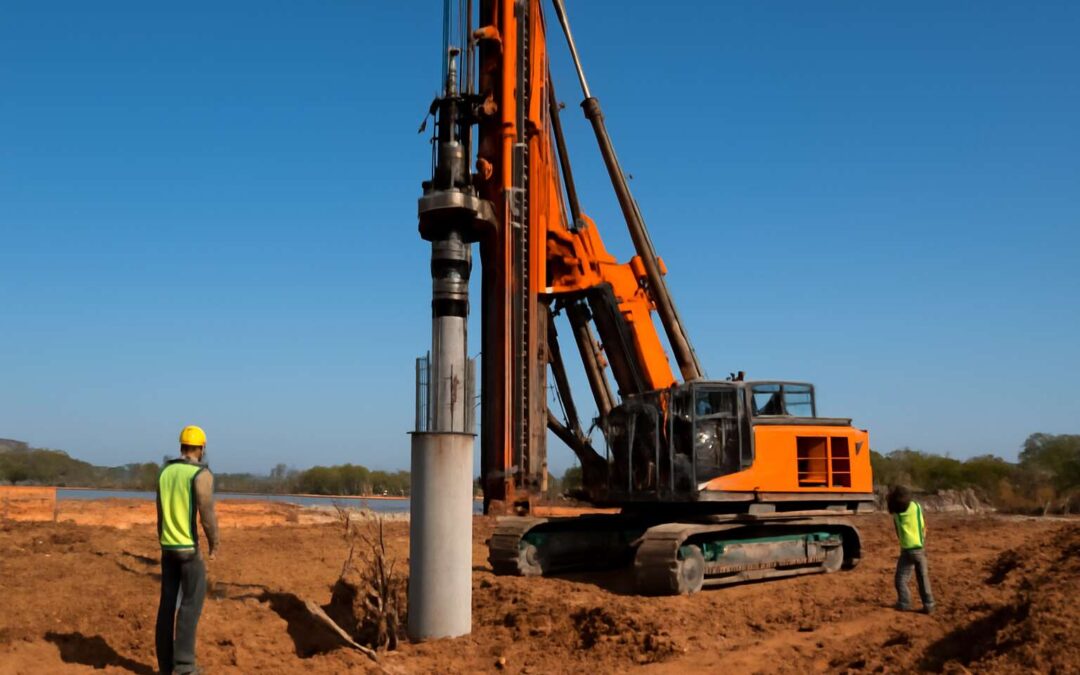
Geotechnical Assessment and Site Preparation
Soil and rock profiling for piling design
In South Africa, poor soil data can swing timelines by months and budgets by millions—it’s the kind of truth that reveals itself before the crane wakes. Geotechnical assessment maps the subsurface, turning clay, gravel, and bedrock into a readable profile that guides pile depth, diameter, and type. This early insight directly shapes piling construction work on your site and sets a reliable course for the project’s rhythm.
Soil and rock profiling for piling design blends field truth with laboratory detail. Understanding stiffness, shear strength, and groundwater behavior reduces risk and keeps schedules honest. The following steps are standard practice:
- Borehole logging and soil stratigraphy
- In-situ tests (SPT/CPT) and rock mass classification
- Groundwater assessment and drainage planning
This careful choreography translates into safer foundations and less surprise once the rig arrives.
Ground improvement and excavation preparations
The ground speaks first, even before the auger bites. In SA, a seasoned engineer quips, “Groundwater is the thief of schedules.” A geotechnical assessment maps subsurface conditions, directing where to deepen piles, route drainage, and set protective measures. That clarity sets the rhythm for site preparation and smoother piling construction work.
Site preparation blends ground improvement with careful excavation. From dewatering plans to temporary support and load distribution, the aim is stabilise soils, minimise settlement, and balance cut and fill without stalling production. The process favours adaptable methods that fit the soil profile and project timeline.
- Dewatering and groundwater management
- Ground improvement option assessment
- Excavation support and soil handling
Together, these facets turn the ground into a silent partner, guiding excavation and setting the stage for accurate, controlled work on site.
Groundwater management and dewatering strategies
In SA, a veteran engineer once quipped, Groundwater is the thief of schedules—a warning that lands long before the augur dips. In piling construction work, the first act is geotechnical assessment, a map of whispers beneath our boots that sets the tempo for every stake.
That assessment turns subterranean murmurs into a clear script: where piles must descend, how drainage will unfurl, and which protective layers must stand watch. With this clarity, site preparation becomes artful choreography, balancing risk with momentum and trimming the risk of delays.
- Wellpoint dewatering systems
- Deep-well pumping for higher water heads
- Strategic drainage routing and seepage barriers
Once groundwater management is tuned, piling construction work resumes with a disciplined rhythm, the ground a cooperative partner rather than a stubborn foe, delivering precise outcomes under the sunlit South African horizon.
Assessing impact on adjacent structures and utilities
Across South Africa, nearly one in five piling projects hit delays before the first auger bites into ground—the kind of statistic that makes the ground itself lean on your plans! Geotechnical assessment, meanwhile, translates the quiet whispers beneath our boots into a script you can trust, guiding where piles descend and how drainage will unfurl. In piling construction work, this careful listening sets tempo and keeps schedules honest!
Site preparation begins with a precise evaluation of impact on adjacent structures and utilities. We map foundations, service corridors, and planned loads to foresee interaction and avert surprises.
- Adjacent structures and their settlement tolerances
- Underground utilities and service lines
- Surface drainage and groundwater flow paths
With that clarity, site preparation becomes choreography—temporary works, limited vibration, and measured access. The ground becomes a cooperative partner, not a stubborn foe, as we script every step.
Piling Methods and Technologies
Driven piles vs cast-in-place piles
Foundations often drive 10–20% of a project’s cost, and the piling method is the hinge that keeps projects moving. In piling construction work, choosing between driven piles and cast-in-place piles shapes everything from speed to long-term performance.
Driven piles are manufactured for quick installation and are driven or vibro-placed, which minimizes on-site curing and often reduces temporary groundwater disruption. Cast-in-place piles are bored in place and then filled, offering flexibility when soils vary or large, complex loads are needed—something South African sites often require given local ground conditions. That’s no small thing!
Considerations that guide method selection include:
- Site access and space for equipment
- Vibration, noise, and nearby structures
- Soil profile and anticipated loads
In the end, the decision remains a balance of time, cost, and performance within the constraints of the project.
Prestressed concrete piles and steel piles
Foundations are quiet heroes that bear a city’s ambitions, and in South Africa’s soils a choice in piling construction work can accelerate timelines by as much as 20%. The right pile method steadies the ascent.
Prestressed concrete piles arrive as precast heroes, their steel tendons tensioned before the pour to forge stiffness. They travel quickly to site, demand less on-site curing, and resist repeated axial loads with certainty.
Two stalwart technologies stand ready to meet shifting soils and complex loads:
- Prestressed concrete piles offer consistent quality, fast driving, and long-term stiffness for uniform axial loading.
- Steel piles provide high strength-to-weight, superb adaptability in tight spaces, and effective coatings to guard against coastal corrosion.
Choosing between them depends on soil variability, groundwater, and project duration. In SA, engineers balance cost, vibration, and future maintenance to ensure the substructure harmonizes with the skyline. This balance shapes piling construction work across South Africa.
Screw piles and continuous flight auger piles
In South Africa’s urban landscapes, piling construction work shapes the skyline with surprising speed and quiet precision — and the right method can shave weeks off schedules.
Screw piles are helically threaded steel shafts that twist into soil, delivering instant load transfer. Installation is fast, with minimal vibration, and rigs can slip through tight plots and constrained sites.
Continuous Flight Auger (CFA) piles drill with a hollow-stem auger while concrete is pumped through, creating a continuous reinforced column. They excel in variable soils, minimize spoil, and keep noise to a minimum.
- Screw piles: rapid setup, low vibration, great for restricted access.
- Continuous Flight Auger piles: large-diameter capacity, clean bore with reduced spoil.
The choice hinges on soil variability, groundwater, and project duration; both technologies broaden the toolbox for SA projects and align piling construction work with ambitious timelines.
Innovative pile technologies and hybrids
Across South Africa’s urban cores, piling construction work now moves faster than city traffic—up to 30% shorter project setup times are common on modern sites.
Innovative pile technologies and hybrids shrink disruption, delivering precision with quieter operation. Hybrid concepts blend deep-drilling with soil improvement, while sensor-enabled piles provide real-time load and movement data, turning data into decisions before the first concrete cures.
- Hybrid CFA-jet grout systems for variable soils
- Sensor-integrated piles for real-time monitoring
- Low-noise rotary bored piles with damping
Ground-specific choices, including groundwater and soil variability, guide the selection, ensuring projects fit ambitious timelines without compromising safety or performance.
Materials, Design, and Structural Considerations
Pile selection criteria and load transfer mechanisms
Materials for piling construction work span reinforced concrete, steel sections, timber, and composites, chosen for durability, local availability, and soil chemistry across South Africa’s diverse sites. The right material reduces maintenance, speeds installation, and keeps projects on track despite urban constraints.
- Material compatibility with local groundwater and soils
- Corrosion protection choices for SA climates
- Availability and cost within the SA supply chain
In design and structural considerations, end bearing, skin friction, pile stiffness, and settlement tolerance shape the solution. Pile selection criteria include bearing capacity, install feasibility, and corrosion exposure. Load transfer mechanisms—end bearing versus friction—decide how the structure shares load with soil and resists movement under dynamic loads—nobody wants a wobbly legacy.
These choices influence long-term performance, enabling reliable foundations for major projects across the country while respecting local codes and environmental conditions.
Design codes and standards for piling
Foundations keep the city upright; the ground remembers every choice. “The ground never forgets,” a veteran engineer likes to say, and in piling construction work that memory becomes a blueprint for durability across South Africa’s varied soils. I’ve stood at the edge as they rise, listening to the earth breathe!
Materials must speak to their surroundings—groundwater chemistry, soil strata, and our bustling supply chains. Corrosion protection keeps SA climates honest, extending life in damp basements or sun-scorched suburbs, where maintenance drains budgets faster than a building can breathe.
- Corrosion protection strategies
- Material compatibility with groundwater
- Local availability and cost
Design choices hinge on end bearing, skin friction, pile stiffness, and settlement tolerance, all steered by design codes and standards for piling. In practice, engineers balance bearing capacity with install feasibility while respecting environmental guidelines, municipal bylaws, and the stubborn patience of the soil.
Connection details and cap design
In piling construction work, the material conversation is a late-night diary kept with concrete, steel, and composite whispers. Groundwater movement, salt aerosols, and supply chains dictate what endures long after the crane departs.
Cap design must translate bottom soil memory into a stable superstructure. The cap ties distant piles into one rigid skin, transferring load through planned reinforcement, grouting, and protective coatings. Connection details—how piles mate with the cap, how belled ends or sleeves align—shape the final resilience.
- Cap reinforcement layout and spacing
- Corrosion protection at joints
- Grouting and tendon anchorage
Material choices embrace localities and life-cycle cost, balancing stiffness, ductility, and cap geometry to tolerate deformation without cracking. Design codes guide the limits, yet the craft remains a dialogue with the soil’s stubborn patience.
Durability and corrosion protection strategies
‘The ground remembers,’ a veteran engineer likes to say, and piling construction work is the long, patient dialogue that follows. Materials must marry stiffness with ductility, balancing life-cycle cost against the harsh realities of coastal salinity, sultry soils, and shifting groundwater in South Africa. The design aims for durable performance, with protective coatings, corrosion-resistant alloys, and judicious joint detailing that resist cracking. Cap geometry should translate soil memory into a stable superstructure, providing a rigid skin for load transfer even as climate and supply chains test resilience!
Durability and corrosion protection strategies arise from this dialogue. Choices in concrete mixes, protective finishes, and joint protection protocols endure wind, salt, and vibration. The interface where cap and piles meet becomes a focal point—where time rewards those who listen.
- Local material blends resisting sulfate attack
- Coatings and protection for embedded steel
- Grout formulations and tendon anchorage
- Non-destructive testing and health monitoring
Quality of concrete and reinforcement specifications
Material choices in piling construction work set the stage for endurance. Quality concrete and reinforcement specifications shape life-cycle performance: low-permeability mixes, sulfate-resistant cement, precise water-cement ratios, and well-graded aggregates that resist shrinkage. We temper soundness with careful curing, sealing the matrix so that every micro-crack stays quiet, a guarded whisper against the sea’s capricious temperament.
- Low permeability concrete targets and curing regimes
- Corrosion-protected reinforcement strategies
- Quality aggregate control and workability
Design nuance translates into safer, longer-lasting structures. For the cap and pile interface, define generous cover, robust grout formulations, and compatible tendon anchorage to stave off cracking. In South Africa’s marine sands, protective coatings and compatible cementitious matrices weather salt spray and shifting groundwater.
Structural considerations keep the dialogue alive: true alignments, flawless load transfer, and non-destructive testing to catch flaws early. We champion health monitoring and periodic verification of pile integrity, letting quiet, patient strength endure wind, vibration, and climate-driven cycles.
Installation Equipment, Methods, and Logistics
Equipment selection for pile types
On a crowded South African site, the rhythm of piling begins with the right machine. One misfit rig can halt weeks of progress and echo through the budget. In piling construction work, installation equipment is more than a tool choice—it’s a risk gauge, a tempo setter, and a safeguard for worker safety. A veteran foreman likes to say: the pile speaks through the heartbeat of the rig that drives it.
- Rotary drilling rigs for bored piles
- Impact or vibro drivers for driven piles
- CFA and continuous flight auger rigs for efficient piles
- Heavy-duty cranes and handling equipment for casings and forms
Methods must align with soil conditions and pile type, while logistics selection ensures equipment can reach the site, stage efficiently, and fuel and maintenance are kept in balance. When these threads are woven together, piling construction work unfolds with disciplined tempo and fewer surprises on demanding SA sites.
Drilling, driving, and installation techniques
On a crowded South African site, the heartbeat of piling work is measured in rotations and rumbles. The right installation equipment shapes the tempo, balancing risk against operator safety and nearby utilities. A careful choice keeps the schedule intact and the budget in check!
Methods align with soil conditions and pile dimensions, while logistics ensure machines can reach the site, stage efficiently, and refuel without bottlenecks. In piling construction work, the sequence of drilling, driving, and installation must stay coordinated, with checks that tempo and precision stay in step.
- Rig readiness and crew briefing to minimize idle time
- Sequenced drilling, driving, and installation to preserve alignment
- Crane choreography and safe handling of casings and forms
Done right, the rhythm carries over the trench and scaffold, turning potential chaos into a measured, confident flow on demanding SA sites.
Vibration and noise control measures
On South Africa’s busiest corridors, piling construction work moves to the tempo of rotating rigs and diesel thrum. A single pile can steer a project toward profit or delay, so rhythm matters as much as design. The right equipment sets that pace!
Installation gear must fit soil, pile size, and site access. Compact drilling rigs, vibro-hammers, and stable cranes handle casings and forms with confidence, keeping lifts precise rather than hurried.
Methods and logistics must stay aligned as drilling, driving, and installation move in step. The team maps access routes, staging, and crane choreography, minimizing idle time while maintaining safety.
- Vibration and noise control measures: isolation pads, mufflers, enclosures
- Barriers and buffer zones to minimise transmission to neighbours
- Operational scheduling to limit peak noise on busy SA streets
Site logistics and access planning
Across South Africa’s bustling corridors, every pile of steel is a note in a larger score—and the tempo of piling construction work can cut site time by up to 15%. When rhythm and design align, projects stay on track despite urban noise and tight spaces. It’s not just about strength; it’s about timing, trust, and the storytelling pace of the build.
Installation gear becomes an instrument of precision. We deploy compact drilling rigs for restricted sites, vibro-hammers where controlled driving matters, and stable cranes that move with measured grace. The result is placement with confidence rather than haste—each pile finding its place in the plot without rushing the narrative. This is piling construction work done with a craftsman’s patience.
Site logistics and access planning keep the work flowing while neighbours remain undisturbed. We map access routes, set staging yards, and choreograph crane movements to shed idle time without compromising safety.
- Access routes and entry points
- Staging areas and material flow
- Crane choreography and lift paths
Quality Assurance, Safety, and Sustainability
Piling integrity testing and non-destructive evaluation
In piling construction work, quality assurance acts as the gravity that keeps every pile honest and steady. Foundations speak in concrete—”the truth hides in the tiniest crack,” a veteran likes to say. A well-woven QA plan ensures traceability from materials to final connections.
Piling integrity testing and non-destructive evaluation are not afterthoughts but the shared discipline that guards structural truth. The method is incremental, precise, and aligned with local standards in South Africa. Consider these tools:
- Low-strain integrity testing (LST)
- Cross-hole sonic testing (CHT)
- Rebound hammer surface checks
Safety governs every move, from induction to final pour. Rigorous training, personal protective equipment, and vibration controls keep workers and neighbours safe, with monitoring that adapts to site conditions and community expectations.
Sustainability threads through supply chains and spoil management, aiming for reduced waste and longer pile lifecycles. In South Africa, responsible sourcing and energy-conscious execution prove that durable engineering can coexist with stewardship.
In-situ load testing and verification protocols
The truth hides in the tiniest crack, as a veteran likes to say, and on piling construction work that crack-detection discipline is QA’s gravity. In-situ load testing and verification protocols translate gritty field effort into verifiable performance, trimming risk and boosting confidence before any cap is cast.
Safety governs every move—from induction to final pour. Rigorous training, personal protective equipment, and vibration controls keep workers and neighbours safe, with monitoring that adapts to site conditions and community expectations.
- Induction and competency assessment
- Real-time vibration and noise monitoring
- Community liaison and incident reporting
Sustainability threads through supply chains and spoil management, aiming for reduced waste and longer pile lifecycles. In-situ load testing and verification protocols prove that durable engineering can coexist with stewardship, especially in South Africa where responsible sourcing and energy-conscious execution shape every pour.
Safety standards, training, and risk mitigation
Piling construction work is a study in patience and precision; the biggest risks hide in invisible cracks and the sway of earth beneath steel. The veteran on every site whispers a creed: the truth hides in the tiniest crack, and one fault shadows the whole pour.
Quality Assurance sits at the center of every milestone. Safety standards, induction, and competency assessment set the tempo; real-time vibration and noise monitoring keeps pace with shifting sites. A responsive community liaison turns potential incidents into solved problems before they emerge.
- Induction and competency assessment
- Real-time vibration and noise monitoring
- Community liaison and incident reporting
Sustainability threads through supply chains and spoil management, turning a careful design into a resilient, longer-lived outcome. In South Africa, responsible sourcing and energy-conscious execution define the craft, reducing waste and safeguarding communities.
Environmental impact and sustainable piling practices
Concrete courage meets a clipboard: on piling construction work, the difference between a flawless pour and a wet blanket is a robust QA cadence that doesn’t chase itself around the site. In South Africa, projects that embed QA gates cut downtime by up to a quarter, turning potential crises into smooth pour sessions.
Safety and sustainability walk hand in hand. Safer sites mean fewer remobilisations, and sustainable practices reduce waste’s footprint on communities and the environment. The approach is pragmatic: choose materials wisely, monitor vibrations, and design for long life rather than quick fixes.
- Pre-pour quality checks and traceability
- Real-time vibration and noise monitoring dashboards
- Clear community liaison and transparent incident reporting
By weaving QA, safety, and sustainability into the backbone of every job, the craft in SA stays resilient—quietly efficient and proudly responsible.
Documentation, traceability, and regulatory compliance
Form follows fate in piling construction work, but fate is written in records. In South Africa, disciplined Quality Assurance, Safety, and Sustainability Documentation can trim downtime by up to 25%, turning tremors of doubt into the quiet rhythm of a certified pour. For every site, QC logs, risk assessments, and compliance certificates thread together a safety-first narrative that steadies the ground beneath the crew and the budget.
- Documentation and traceability for quality assurance and materials
- Safety training records and incident readiness
- Sustainability reporting, regulatory filings, and community engagement records
Traceability becomes a living lineage; audits become rituals that keep the crew aligned and the project true to its promise.
