
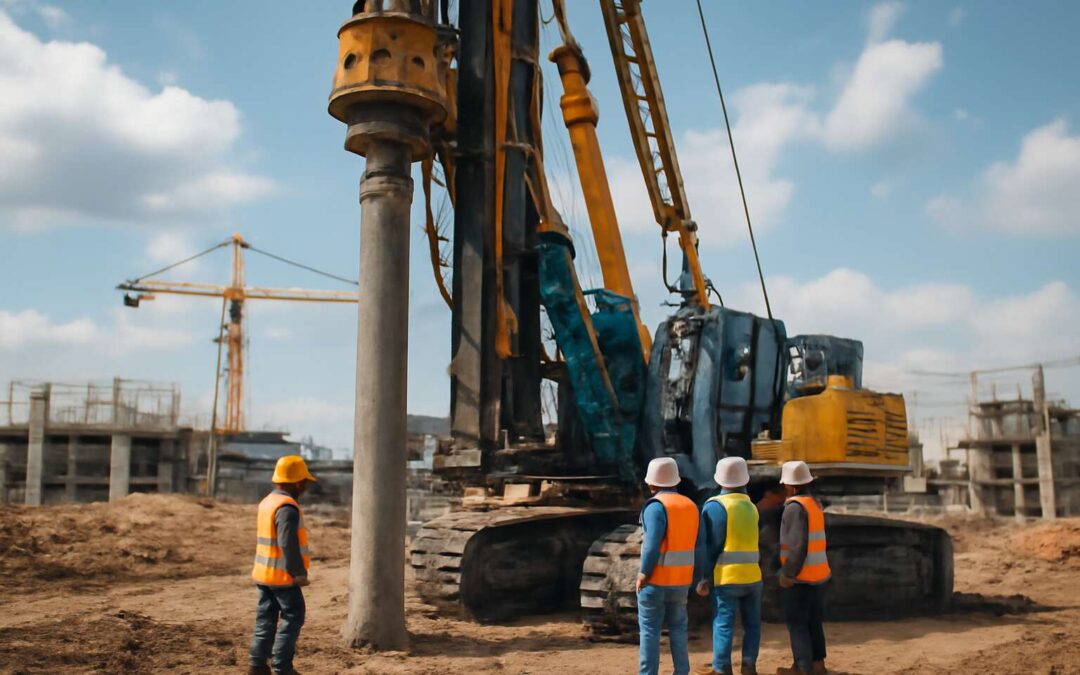
Piling solutions and techniques
Deep foundation methods overview
“The ground never forgets,” a foreman once whispered, and that line still echoes across our South Africa sites. Piling solutions blend science with instinct, because deep foundation methods must endure loads, tremors, and the stubborn stitch of local soils. In practice, we match technique to profile—from calcrete to alluvial sands—before a single auger bites the earth.
Within piling activities, choosing the right method is the heart of reliability. Here are the common paths we navigate:
- Driven piles for rapid, rigid support in firm strata
- Drilled shafts and bored piles when soil is loose or complex
- Continuous flight auger (CFA) and related deep-foundation options for minimal vibration
Each option carries its own rhythm, cost, and timeline, and our crews read the ground like a storybook, turning soil conditions into solid, silent structures.
Drilled vs driven piles
In South Africa’s evolving cityscapes, a single pile can bear a hundred-ton load and keep a skyline steady—piling activities shaping the quiet backbone of our built world. Drilled shafts and driven piles offer divergent paths as crews read the ground like a weathered map, converting stubborn soils into solid, silent anchors.
Driven piles deliver rapid, rigid support in firm strata, their hammer blows a drumbeat of progress. Drilled shafts, or bored piles, flourish where soils are loose or complex, enabling larger diameters with careful casing and grout to steady uncertain ground.
Key considerations include:
- Ground conditions and required load path
- Vibration tolerance and proximity to existing works
- Installation speed and overall cost
Each method carries its own rhythm, cost, and timeline, and our teams translate soil into structure with measured care, ensuring the future stands firm.
CFA and displacement piles
In the realm of piling activities, CFA and displacement piles weave the skyline with quiet, precise magic. South Africa’s diverse soils become steady anchors as these methods translate ground into columns that stand firm against time and weather.
CFA piles rely on a continuous flight auger that drills and pours concrete in one steady motion. The result is slender, low‑vibration columns ideal for dense urban sites where spoil handling and site quietness matter—and where schedules demand steady tempo.
Displacement piles push soil aside rather than removing it, delivering robust capacity with minimal vibration and tight layouts. They excel in restricted spaces, offering speed and reliable performance on challenging blocks where access is king.
- Site vibration tolerance
- Soil density and groundwater
- Access for equipment and spoil handling
- Installation speed and overall cost
Pile load testing and design considerations
In SA, nearly half of major developments rely on piling activities to turn uncertain ground into something you can lean a building on—quiet, precise work that keeps schedules sane and foundations solid.
Solutions blend robust technique with pragmatic design. Pile load testing—static or dynamic—gives a ground truth for capacity and serviceability, while design considerations balance soil reality, groundwater, vibration, and site logistics against project tempo.
Key design considerations include:
- Soil density and groundwater behavior
- Expected loads, duration, and interaction with adjacent structures
- Access for equipment and spoil handling
- Vibration control and installation speed
When done well, these elements render South Africa’s silhouette rock-steady and a touch witty—proof that solid foundations can support ambition without turning construction sites into chaos!
Soil conditions and pile selection guidelines
In SA, nearly half of major developments lean on piling activities to calm capricious ground into something a building can lean on. The ground talks, and the engineer replies with quiet, precise assurance—precision that keeps sites sane and schedules intact.
South Africa’s soils vary from stiff clays to calcretes and alluvial sands, demanding discernment in pile selection. We weigh soil density, groundwater behavior, and how loads traverse strata. Where the water table is mercurial, we lean on conservative embedment and grout envelopes; in rocky pockets, length and surface friction take center stage.
- Soil behavior and groundwater regime
- Load path and foundation interaction
- Site access and spoil management
- Vibration control and installation pacing
With this couture of criteria, the skyline remains elegant and pragmatic—proof that piling activities can be both steadfast and surprisingly nimble.
