
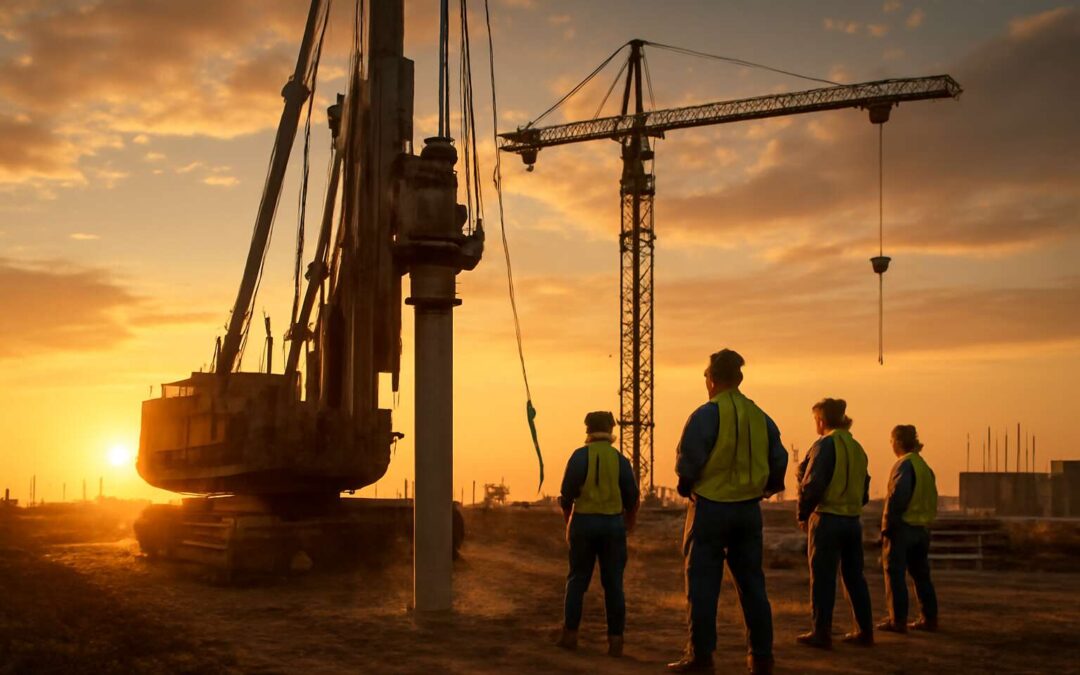
Foundations and Piling Fundamentals
What is piling in construction
Ground truth holds the frame together; statistics remind us that up to 30% of structural issues begin below grade. Foundations are the quiet protagonists of any building, shaping safety, cost, and longevity. In South Africa’s varied soils, thoughtful piling and foundation design are not optional, but essential!
Piling for building translates theory into a stable reality: deep supports that transfer loads through variable strata to firmer layers. It cushions against settlement surprises and keeps projects on track as teams respond to soil profiles, water tables, and the intimate dialogue between ground and structure.
Key considerations include:
- Soil profile and bearing capacity
- Load paths and soil-structure interaction
- Material options and installation methods
Key roles of piles in foundations
Foundations are the silent hinge of any structure, the unseen engine that translates earth into confidence. In South Africa, where soils whisper and shift, the stakes are high and the results patient. A robust base begins with a deliberate design philosophy, and piling for building emerges as the quiet conductor—guiding loads, curbing settlement, and blessing projects with enduring steadiness.
Key roles of piles in foundations include:
- Load transfer through variable strata to firmer layers
- Controlling settlement and reducing differential movement across foundations
- Providing a reliable load path from structure to soil
- Enabling design flexibility in challenging water tables or weak soils
- Absorbing and dampening dynamic loads, such as vibrations or seismic energy
Ultimately, piling for building aligns soil’s whispers with structural intent, turning uncertain ground into a steady stage for our craft.
Typical load paths and design goals
Foundations are the quiet hinge of a building, the part that keeps tall ambitions from tipping into doubt. “A foundation is a promise that a structure will endure,” we remind ourselves, as South Africa’s diverse soils demand humility and precision. The craft of loading and restraint begins long before the crane rises.
Understanding typical load paths helps designers align soil behavior with architectural intent:
- Vertical load transfer from columns and walls into deeper, firmer strata
- Distributing and damping lateral and wind-induced forces to reduce sway
- Providing a predictable, redundancy-rich path to prevent local failures
Design goals emphasize minimizing settlement and differential movement, ensuring durability, and enabling resilient performance under dynamic loads. For challenging soils and water conditions, piling for building marks the difference between cautious estimates and enduring certainty.
When to consider pile foundations
Foundations decide a building’s fate long before the crane hums. The true height of a structure is decided underground, where soils whisper and engineers listen. In piling for building, the ground writes the contract—hear it, and you know where certainty begins.
Pile foundations emerge when bearing capacity is stubborn, water tables are mischievous, or loads run heavy. Expansive clays, submerged fills, or sudden stratum changes derail delusions of plain settlement. The right piles deliver a predictable path through these quirks.
Key indicators include:
- Weak soils with low bearing capacity
- High groundwater and variable moisture
- Heavy, dynamic loads or tight site constraints
- Nearby excavations or vibrations that threaten stability
In South Africa, dolomitic pockets and abrupt strata make piling for building a necessity, not a luxury—defining resilience long after the last load test.
Types of Pile Systems for Building Projects
Driven piles versus cast-in-situ piles
Foundations are the quiet workhorses of any build, and in South Africa’s varied soils piling for building is where the story begins. A veteran engineer likes to say, “The ground never lies”—and the pile system is how we translate its truth into a stable home for your project.
Two main pathways stand out: driven piles, usually precast concrete or steel, driven quickly to depth; and cast-in-situ piles, bored or augered and then cast on site. Types in brief include:
- Driven piles: precast concrete or steel elements driven to depth
- Cast-in-situ piles: bored or augered and cast on site
Both paths are central to piling for building, each with strengths in different site conditions.
For South Africa projects, choices hinge on soil profile and urban constraints; driven piles offer speed and proven performance, while cast-in-situ piles handle softer soils and tight layouts. Piling for building remains the quiet backbone of a future-proof structure.
Precast concrete piles
“The ground never lies,” a veteran engineer likes to say—especially when talking about piling for building. In South Africa, the soil tells its story through every sleeve of concrete and steel, shaping the foundations under our cities.
Two main pathways define pile systems for building projects in SA: driven piles and cast-in-situ piles.
- Precast concrete piles
- Steel piles
- Cast-in-situ piles
Within piling for building, the choice hinges on site conditions and urban constraints. Precast concrete piles offer speed and dependable performance on dense sites, while cast-in-situ piles shine where soils are soft or access is restricted. Steel piles add high capacity with flexible layouts, quietly supporting complex footprints.
Steel piles and their applications
Steel piles are the backbone of piling for building, shaving up to 30% off install time when speed and certainty matter. In South Africa’s urban soil, they punch through with high capacity, minimal disruption, and flexible layouts that adapt to tight footprints. Steel’s resilience shines in pockets and rock ledges where every drive counts.
For projects with strict access or tight timelines, driven steel piles deliver a reliable rhythm to the build—I’ve seen it on SA sites. They support high-rise cores, basements, or complex footprints where formwork and crane time are precious.
- H-piles for solid vertical support and clear load paths
- Pipe piles and tubulars for soft soils and corrosion protection
- Sheet piles for shoring and tight cofferdams
Together, the approach supports piling for building, ensuring quick installation with low noise and limited vibration, suiting SA sites that must respect neighbours and environment.
Timber piles and environmental considerations
Foundations that breathe, timber piles rise like living roots threading through city soil. In piling for building, timber offers a renewable rhythm—lighter handling, lower vibration, and a gentler footprint on neighbours. From round logs to squared timbers, treated to resist rot, they bend with the soil’s moods and deliver steady support with a whisper of natural warmth.
- Sourcing from responsibly managed forests
- Non-toxic or low-toxicity preservatives
- Lifecycle planning: reuse and recycling
- Local supply reducing transport emissions
On South African sites, these timber systems harmonise with quiet zones and eco-conscious planning; they embody a poetic balance between strength and stewardship in piling for building. The choice of species and treatment will guide durability and cost, while respecting local regulations.
Geotechnical Considerations for Building Piles
Soil testing and site investigations
Earth keeps a ledger, and piling for building begins by reading it. Up to 30% of large projects’ budget overruns are linked to unseen soils. In South Africa’s varied landscapes, geotechnical insight is the compass that prevents surprises before steel meets earth.
Geotechnical considerations emerge from soil testing and site investigations that translate mystery into measure. The toolkit includes boreholes, soil sampling, and tests that reveal layering, moisture, and strength.
- Borehole drilling and sampling
- Standard Penetration Test (SPT)
- Cone Penetration Test (CPT) and geophysical surveys
With solid data, engineers tailor the piling for building—spacing, length, and load path—so the ground whispers cooperation rather than resistance. In South Africa, thorough evaluation transforms hazards into resilience, and piling for building becomes a measured certainty.
Soil bearing capacity and settlement
Ground truth has a stubborn quietness that reveals itself only when a structure begins to rise. Soil bearing capacity and settlement are the silent arbiters of every piling for building, whether in coastal sands or inland clays—from the Karoo to the Cape flats, the ground speaks in measurements, not guesses.
Key influences on bearing capacity and settlement include:
- Soil strength and layering
- Moisture content and groundwater effects
- Load distribution and potential differential settlement
- Time-dependent behavior and creep in clays
With this data, engineers tailor depths, spacing, and load paths, letting the ground cooperate rather than resist—an insistence that becomes the difference between costly surprises and enduring stability in piling for building.
Ground improvement and alternatives
A recent survey shows soil variability drives up to 60% of foundation surprises in South Africa, from the windy coasts to the Karoo’s arid clay. Geotechnical considerations for building invite us to listen to the ground’s quiet language—moisture, stiffness, and time—before concrete meets steel.
Ground improvement and alternatives can temper the ground’s stubbornness, guiding load paths and reducing differential settlement.
- Vibro-compaction and dynamic compaction
- Cementitious stabilization (soil cement)
- Lime or cement column techniques
- Drainage optimization and dewatering
In piling for building, these choices tune depth, spacing, and load paths, letting the ground cooperate rather than resist.
Pile capacity estimation methods
A recent South African survey finds soil variability drives up to 60% of foundation surprises. Geotechnical considerations for building piles invite us to read the ground’s quiet language—moisture pockets, stiffness, and time—before concrete meets steel. In piling for building, these signals shape how deep we dig, how tightly we space piles, and how load paths are choreographed.
Pile capacity estimation methods anchor confidence in design.
- Static bearing capacity analyses separating end bearing from skin friction
- Dynamic pile testing using hammer energy and set to infer capacity
- Full-scale static load tests to verify ultimate capacity and settlement behavior
With these methods, piling for building becomes a dialogue with soil, ensuring performance across South Africa’s diverse landscapes.
Installation Methods and Best Practices
Pile driving and drilling techniques
Foundations hate surprises, and so do we. In many South African sites, a grip comes from choosing the right installation method up front. “piling for building” gives a foundation the grip it needs when the strata refuse to cooperate.
Driven piles deliver speed, while drilled piles with casing suit fragile layers and urban constraints. Best practices focus on sequencing, alignment, and verification, to minimize settlement and disturbance. Here’s a compact checklist:
- Assess geotechnical data and select pile type accordingly.
- Maintain strict borehole integrity and casing where needed.
- Conduct load tests and document results for quality control.
Quality workmanship means monitoring penetration, alignment, and cap seating during the job. In the South African context, collaboration with the site team and utility owners prevents nasty surprises. A well-managed pile drive keeps everyone smiling, even when the drill bites rock.
Quality control and testing methods
Foundations bite back when installation method isn’t chosen with care. In South Africa, piling for building demands a front-loaded decision that respects urban constraints and variable strata. As a veteran supervisor puts it, “a pile is the stubborn truth of the build.”
Quality control starts at borehole integrity and stays with precise alignment, sequencing, and cap seating. A compact checklist keeps the crew honest:
- Borehole integrity and casing status
- Alignment and placement sequence
- Documentation of penetration depth and level
- Verification prior to cap seating
Testing methods range from static load tests to dynamic testing and non-destructive integrity checks, all designed to confirm capacity and minimize settlement. This is the heartbeat of piling for building done right.
Pile integrity testing and load tests
Installation methods must be chosen with urban constraints and variable strata in mind. Piling for building demands a disciplined approach: align technique with ground conditions, site logistics, and client expectations, not with bravado. The best practice ties pile integrity testing to the installation sequence, so the system proves its capacity as it goes in. When every borehole obeys a plan and every advance is surveyed, the structure gains quiet confidence—long before the first concrete sets.
- Real-time monitoring of verticality, bore depth, and alignment to catch deviations early.
- Calibrated equipment settings and controlled advance to minimize disturbance to surrounding soils.
- Early non-destructive checks and selective load verification to validate capacity before proceeding.
In the end, the harmony between method and measurement defines a sound foundation. This is how the craft earns its quiet reputation and avoids the drama of compromised performance.
Site safety and environmental controls
Urban SA sites demand a peculiar brand of discipline. In piling for building, precision outruns bravado and paperwork; the ground talks, and the crane listens. In crowded urban cores, sequencing can shave up to 30% off rework time. A well-planned installation respects ground conditions, site logistics, and client expectations, not bravado. The result is a quiet confidence that grows long before the first pour—and travels across the scaffold with the rhythm of a well-timed heartbeat.
- Real-time monitoring of verticality, bore depth, and alignment to catch deviations.
- Calibrated equipment settings and controlled advance to minimize disturbance to surrounding soils.
- Early non-destructive checks and selective load verification to validate capacity before proceeding.
Site safety and environmental controls are not afterthoughts; they shape the sequence, proving safer operation for workers, neighbours, and groundwater. In dense urban cores, dust suppression, noise management, and responsible waste handling protect reputations as surely as any design detail.
Standards, Costs, and Project Planning
Regulatory standards and codes for piling
Standards governing piling for building in South Africa are more than paperwork; they shape every decision from materials to methods. National Building Regulations and Building Standards Act, with SANS codes for foundations, set the baseline. When we align with these regulations, the foundations we craft become resilient against soil quirks and wind, a quiet promise of long-term stability.
Costs mirror this alignment. Upfront investments in certified materials, controlled installation, and third‑party QA smooth the path and reduce future remediation risk. In piling for building, the payoff is durability, fewer surprises, and a smoother handover.
- Certified materials and workmanship
- Independent QA and testing
- Permit fees and design approvals
- Regulatory documentation
Project planning must weave regulatory standards into schedules and design intent. Early dialogue with authorities and engineers keeps piling for building on a feasible timeline.
Cost estimation and budgeting for piles
Foundations are the quiet negotiators of a project. In South Africa, industry chatter suggests up to 60% of piling disputes spring from regulatory wrangles rather than soil quirks. Standards governing piling set the baseline, shaping choices from materials to methods. When we align with the National Building Regulations and SANS, the piling for building becomes a shield—resisting wind, bearing soil quirks, and sparing the schedule from costly backtracking.
Costs mirror this alignment. Upfront investments in certified materials, controlled installation, and third-party QA smooth the path and reduce the price of future remediation. Permit fees and design approvals sit in the budget as essential pillars, not add-ons to a shaky start.
- Regulatory timelines integrated into the budget
- Design approvals and procurement milestones scheduled early
- Contingencies for permit delays and site-specific hurdles
Project planning cost estimation and budgeting for piles demands early dialogue with authorities and engineers to lock a feasible timeline. I keep a regulatory calendar close at hand, pairing it with procurement milestones so piling for building remains a predictable milestone, not a gamble.
Lifecycle considerations and maintenance planning
Standards are not decorative curtains; they are the backbone of piling for building, turning ambition into predictable reality. In SA, compliance with the National Building Regulations and SANS defines how piles are chosen, installed, and tested, shaping everything from materials to corrosion protection. Respect the framework, dodge late-stage drama.
Costs mirror the compliance logic. Upfront investments in certified materials, precise installation, and independent QA may look premium, but they curb future remediations and schedule churn. Permit fees and design approvals sit as pillars in the budget, while maintenance planning funds routine inspections and protection.
Project planning lifecycle demands early dialogue and a regulatory calendar, paired with procurement milestones to keep piling for building on track.
- Early design approvals
- Procurement milestones
- Permit delay contingencies
- Periodic pile integrity checks
Case studies and project planning tips
Standards are not decorative curtains; they anchor piling for building decisions, defining material choices, corrosion protection, and how we test and sign off under SA’s National Building Regulations and SANS. Respect the framework, dodge late-stage drama.
Costs reflect compliance logic. Upfront investments in certified materials, precise installation, and independent QA may look premium, but they curb future remediations and schedule churn. Permit fees and design approvals sit as pillars in the budget.
In real-world planning, case studies show the smartest moves come from early dialogue and a regulatory calendar tied to procurement milestones. These lessons translate to every piling for building project.
- Align design decisions with the regulatory calendar to dodge delays
- Lock in certified suppliers and track material certifications
- Budget for independent QA and third-party testing
- Include permit delay contingencies and procurement buffers
Smart planning keeps piling for building on track and makes compliance feel like a superpower rather than a tax!
