
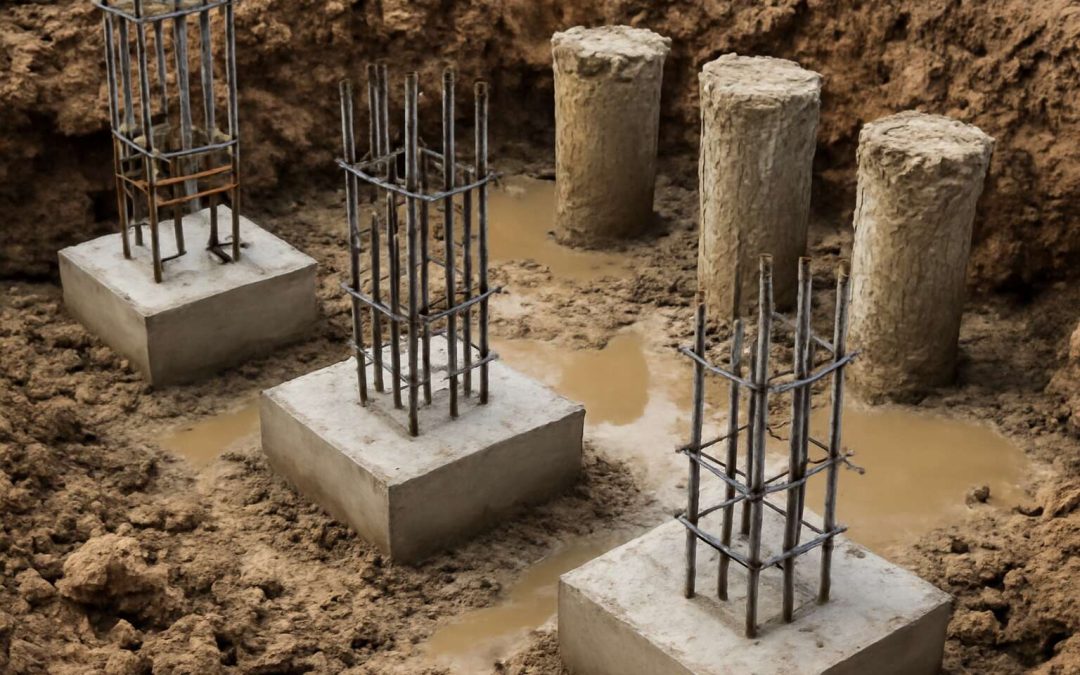
Understanding Foundation Types
What Are Footings?
Understanding foundation types is crucial when planning a construction project—especially in South Africa, where soil conditions can vary dramatically from one region to another. Among the most common foundation options are footings, a tried-and-true method that provides stability by distributing the load of a structure evenly across the ground. Yet, when the terrain is less predictable or the load is exceptionally heavy, piling often becomes the preferred choice. These deep foundations penetrate beneath the surface, anchoring buildings to more stable strata below.
In the ongoing debate of piling vs footing, the decision hinges on several factors, including soil composition, building weight, and budget constraints. For example, footings are generally suitable for stable, well-drained soils, but they might falter where soil stability is questionable. Piling, on the other hand, offers unparalleled support in challenging environments. To better understand the nuances, consider these common types of footings:
- Strip footings, which support load-bearing walls
- Raft or mat footings that distribute weight across a large area
- Isolated footings for individual columns or piers
Choosing between piling vs footing isn’t just a technical decision—it’s a strategic move that impacts the longevity and safety of a structure. In South Africa, where climate and soil variability are significant, understanding these foundation types ensures that buildings are both resilient and cost-effective, standing firm against the test of time and nature’s unpredictability.
What Is Piling?
In the landscape of construction, understanding foundation types is essential to building structures that stand the test of time. When it comes to the debate of piling vs footing, each option offers unique advantages suited to specific soil conditions and load requirements. What is piling? It’s a method of deep foundation that involves driving or drilling long, sturdy columns—called piles—into the ground. These piles reach below the surface, anchoring buildings to more stable strata often found in South Africa’s varied terrain. This process transforms unstable soil into a reliable support system, especially in areas where surface conditions are less predictable.
There are several types of piles, each tailored to different challenges. For example:
- Precast concrete piles for quick installation in stable soil layers
- Driven timber piles, often used in less congested areas with softer soils
- Socketed or drilled piles, which penetrate deeply into bedrock or firm substrata
Choosing between piling vs footing can be a challenge, but understanding the specific needs of your site—like soil composition and load weight—is key. Piling offers unmatched support in challenging environments, ensuring safety and durability for every structure. Whether in rural settings or urban developments across South Africa, deep foundations can be your best ally when surface conditions aren’t enough to guarantee stability.
Key Differences Between Footings and Piling
In the intricate dance of construction, the choice between piling vs footing often feels like a battle between stability and simplicity. Each foundation type holds a distinct philosophy—one rooted in reaching deep into the earth’s secrets, the other trusting in surface stability. The core difference lies in their approach to supporting a structure’s weight. Footings, typically shallow, distribute loads across the surface soil, relying on the strength of the upper layers. Meanwhile, piles plunge deep, anchoring a building into more stable strata beneath unpredictable or weak surface soils.
When considering piling vs footing, the decision hinges on soil conditions and load demands. For example, in South Africa’s diverse terrain, you might encounter scenarios where surface soil cannot bear the weight of a building, making deep piling an essential choice. Conversely, in areas with firm and consistent surface layers, footings may suffice. Recognizing these nuances reveals that each foundation type isn’t simply a matter of preference—it’s about understanding the deeper truths of your site’s geological personality.
Structural Functionality and Design
Role of Footings in Building Stability
When considering the structural functionality of footings, it’s clear they serve as the foundation’s cornerstone, distributing the building’s load evenly across the soil. Proper design ensures stability, preventing uneven settling and structural failure. Footings are typically designed to withstand the vertical loads from the building’s weight, but their effectiveness heavily depends on the soil’s bearing capacity.
The role of footings in building stability becomes even more critical in areas with poor soil conditions. This is where understanding the nuances of piling vs footing can influence decisions—piling offers solutions for deeper or less stable soils, while traditional footings are suited for stable ground.
In essence, the choice between piling vs footing hinges on the soil’s characteristics and the load requirements. For instance, in South Africa’s diverse geological landscape, selecting the appropriate foundation type can mean the difference between a resilient structure and costly repairs. Sometimes, a combination might be necessary, especially in complex projects where soil stability varies across the site.
Role of Piling for Deep Foundations
When it comes to the ins and outs of deep foundations, the role of piling in structural design is often the star of the show — or at least the misunderstood sidekick. Unlike traditional footings, which spread loads over shallow soil, piling dives deep into the earth’s secret layers, tapping into more reliable strata beneath the surface. This is especially vital in South Africa, where soil conditions can be as unpredictable as a weather forecast.
Strategically placed piles act as the backbone of stability in challenging terrains, bearing vertical loads and resisting lateral forces with a quiet confidence that footings simply cannot match. They can be made of concrete, steel, or timber—each suited to different project needs and soil conditions. For complex sites, piling not only provides superior load-bearing capacity but also helps mitigate issues like soil settlement and groundwater fluctuations.
In essence, the design role of piling involves creating a resilient framework capable of handling heavy loads and uneven soil profiles. This often involves:
- Deeply driven piles that reach bedrock or stable strata
- Load transfer from the structure to the pile
- Ensuring minimal settlement over time
While footings tend to be the trusty, shallower foundation option, piling offers a more sophisticated solution for demanding conditions. It’s the foundation equivalent of calling in the heavy artillery—especially when soil stability is in question or structural loads are monumental. The choice between piling vs footing isn’t just a technical decision; it’s a strategic one that can make or break a construction project’s longevity and safety in South Africa’s diverse geological landscape.
Design Considerations for Footings vs Piling
In the shadowy depths of structural engineering, the choice between piling vs footing often determines the fate of a building’s resilience. Structural functionality hinges on understanding how each foundation type interacts with the earth’s secrets, especially in South Africa’s capricious soil landscape. Footings, with their shallow embrace, distribute loads across surface layers—yet, in terrains marred by instability, they risk succumbing to the relentless pull of settlements and shifting ground.
Conversely, piling ventures into the unknown, anchoring structures into the bedrock or stable strata beneath. This subterranean ballet requires meticulous design considerations, such as the load transfer mechanism and the material strength of concrete, steel, or timber used in piles. An intricate web of factors—soil type, load magnitude, and groundwater levels—must be woven into the decision-making process. When the terrain is unforgiving, piling becomes the silent guardian, ensuring the edifice’s longevity against the relentless march of time and nature.
Ultimately, the choice between piling vs footing is a dance of strategy and science. It’s about tailoring a foundation that breathes with the land’s hidden stories—an artful balance of strength, stability, and endurance. In South Africa’s diverse geological landscape, this decision can spell the difference between a monument of durability and a monument to neglect.
Materials Used in Piling and Footing Construction
Common Materials for Footings
When considering the materials used in piling vs footing construction, the choice often hinges on the specific demands of the project and the underlying soil conditions. Footings, typically constructed from common, durable materials such as concrete and reinforced steel, provide a reliable base for shallow foundations. These materials are favored for their affordability and ease of installation, especially in stable soil conditions.
In contrast, piling involves a broader palette of materials, each suited to deeper, more challenging terrains. Concrete piles, whether precast or cast-in-situ, are the most prevalent, offering strength and longevity. Steel piles, known for their high load-bearing capacity, are often employed in high-rise buildings or heavy infrastructure, while timber piles can be useful in less demanding, temporary projects. Choosing the right material for piling vs footing is not simply a matter of cost; it reflects a nuanced understanding of soil behavior, load requirements, and long-term durability.
Ultimately, the materials selected for either piling or footing construction are crucial in shaping the stability and safety of the structure. For instance, in regions of South Africa where soil variability is significant, engineers might prefer concrete or steel piles to ensure resilience against shifting ground. The art lies in balancing material properties with environmental factors, creating foundations that stand the test of time and nature’s unpredictability.
Materials Used in Piling
The choice of materials in piling vs footing construction is a testament to the intricate dance between engineering ingenuity and environmental realities. Piling materials must withstand the relentless forces of nature and the unpredictable South African terrain. Concrete piles, often precast or cast-in-situ, are celebrated for their durability and strength, making them ideal for deep foundations in challenging soils.
Steel piles, with their exceptional load-bearing capacity, are often the preferred choice for towering structures or infrastructure projects. Timber piles, while less common today, still find relevance in temporary or less demanding applications, especially where environmental considerations come into play. The selection of these materials hinges on a delicate balance—matching the soil’s demands with the project’s long-term durability goals.
In the realm of piling vs footing, understanding the nuanced properties of each material is crucial. For example, concrete provides resilience against corrosion and wear, whereas steel offers flexibility and high load capacity. Sometimes, a combination of these materials, tailored to specific site conditions, can create a foundation that is both resilient and sustainable.
Influence of Material Choice on Durability and Cost
The choice of materials in piling vs footing construction is a decisive factor that influences both durability and cost, shaping the very essence of a building’s foundation. In South Africa’s diverse terrain, selecting the right material isn’t just about strength—it’s about resilience against nature’s unpredictable whims. Concrete, renowned for its longevity, provides a formidable barrier against corrosion, making it a staple in piling projects that demand enduring stability.
Steel piles, on the other hand, boast an exceptional load-bearing capacity, often preferred for towering structures and critical infrastructure. Timber piles, while less prevalent today, still serve niche applications, especially where environmental considerations or temporary structures are involved. The decision between these materials hinges on balancing long-term durability with initial investment:
- Concrete offers robustness and resistance to wear but can incur higher costs depending on the complexity of casting or precasting.
- Steel, with its high strength, often reduces installation time but may require protective coatings to prevent corrosion in moist soils.
- Timber remains a cost-effective option for less demanding projects but faces limitations in lifespan and load capacity.
The nuanced selection process highlights how material choice in piling vs footing construction influences project outcomes, blending economic feasibility with environmental sustainability. Ultimately, the right material can turn a simple foundation into a resilient backbone, capable of withstanding the relentless forces of nature and time’s passage, especially in South Africa’s challenging terrain.
Installation Techniques and Construction Processes
Construction of Footings
When it comes to constructing foundations, the installation techniques and construction processes for footings differ significantly from those of piling. Footings are usually cast directly into the ground, often in a straightforward process involving excavation, formwork, and pouring concrete. This method is efficient for shallow foundations on stable soil, making it a cost-effective choice for many residential projects.
In contrast, piling involves driving or drilling deep into the ground to reach more stable strata. The construction process for piles can be more complex, often requiring specialized equipment such as pile drivers or drilling rigs. The process includes installing precast or cast-in-situ piles, followed by ensuring their proper load transfer to the ground. For example, driven piles are hammered into the soil, while drilled piles involve creating a borehole, inserting reinforcement, and filling it with concrete.
Understanding these distinctions is crucial because the decision between piling vs footing can significantly influence the construction timeline, cost, and overall stability of the structure. Both methods require careful planning and precise execution, tailored to the specific ground conditions and load requirements of the project.
Installation of Piles
In the realm of deep foundation construction, the installation techniques and construction processes for piling differ markedly from those used for footings. Piling, often viewed as the backbone of structures demanding deep stability, involves a meticulous choreography of machinery and precision. When installing piles, specialized equipment—such as pile drivers and drilling rigs—becomes an extension of the engineer’s will, transforming raw materials into steadfast supports beneath the earth’s surface.
For driven piles, the process resembles a rhythmic hammering, as the pile is hammered into the ground until it reaches a layer of stability. Drilled piles, on the other hand, are born from a different dance: a borehole is carefully excavated, reinforced steel is inserted, and then filled with concrete, creating a pillar of resilience. The choice between these methods hinges on ground conditions and load demands, making each project a unique symphony of engineering prowess.
Understanding the installation process reveals why piling vs footing is more than a mere choice — it’s a strategic decision that influences the longevity and safety of the entire structure. The complexity and precision of installing piles underscore their vital role in projects where shallow footings simply cannot suffice. Whether employing piling vs footing techniques, the goal remains the same: to forge a foundation as enduring as the mountains themselves.
Timeframes and Complexity
The installation of piles is a process that demands both precision and patience, often extending over several weeks depending on the project’s scale. Unlike the straightforward process of constructing footings, piling involves complex machinery and careful planning. Driven piles require a robust pile driver to hammer the supports into the earth, while drilled piles involve a sequence of boreholes, reinforcement, and concrete pouring. This intricate dance of machinery and manpower highlights why piling vs footing is not just a matter of depth but of strategic engineering choice.
Construction processes for piling are inherently more complex and time-consuming than those for footings. Piling often involves specialized equipment such as drilling rigs or pile drivers, which must be carefully calibrated to match the ground conditions. The entire operation can take anywhere from a few days to several weeks, especially in challenging terrains. Conversely, footings—being shallower—are typically quicker to install, involving excavation, formwork, and concrete pouring. This difference in complexity underscores why piling is favored for deep, unstable soils, whereas footings serve well in more stable, shallow conditions.
- Assessment of ground conditions
- Selection of appropriate piling method (driven or drilled)
- Execution of installation, often requiring specialized machinery
- Inspection and testing to ensure stability and alignment
The overall timeframes and complexity of piling vs footing reflect their core function: deep support versus surface stability. As projects grow more ambitious, understanding these differences becomes vital—each approach tailored to the unique landscape and structural demands, ensuring safety and longevity for generations to come. Truly, the choice between piling vs footing shapes the very foundation of our built environment, especially in South Africa’s diverse terrains, where resilience is not just preferred but essential.
Suitability and Application Scenarios
When to Use Footings
In the shadowed realm of construction, choosing between piling vs footing is a decision that can determine the fate of a structure’s endurance. Footings, with their humble yet vital role, are often the silent guardians of shallow foundations, suitable for sites where the earth’s embrace is firm and unwavering. They are the choice for smaller structures or regions where soil stability is assured, offering a straightforward solution that is both cost-effective and efficient.
However, when the ground beneath is treacherous or uncertain, piling steps into the darkness as the steadfast protector of deep foundations. Piling’s suitability rises in scenarios where soil layers are weak, or the load demands reach beyond what footings can bear. In South Africa’s varied terrain, the decision hinges on factors like soil composition, load requirements, and environmental conditions.
- Weak or uneven soil conditions necessitate the use of piling for stability.
- Structures with substantial load demands require deep foundation solutions like piling.
- Shallow soils with good bearing capacity often favor the simplicity of footings.
The choice between piling vs footing is not merely technical; it is a dance with the land’s secrets, a whispering dialogue between the earth’s hidden layers and the human desire to build resiliently. When the ground’s true nature is veiled in mystery, piling offers a safeguard against the unknown, while footings serve well where trust in the earth’s stability is assured.
Scenarios for Piling Application
Choosing between piling vs footing isn’t merely a technical decision; it’s a reflection of how we interpret the land’s silent language. Piling applications are particularly suited for scenarios where the soil’s stability is uncertain or compromised, demanding a deep-rooted solution that reaches beyond superficial layers. When the ground beneath is unpredictable—perhaps due to water table fluctuations or weak subsoil—piling emerges as the resilient choice, anchoring structures firmly against the unseen forces at play.
In dense urban environments or when constructing heavy structures in South Africa—such as commercial complexes or industrial facilities—piling becomes indispensable. It offers the depth and strength to withstand substantial load demands that shallow footings simply cannot bear. Conversely, for smaller residential projects or sites with firm, consistent soil, footings often suffice, providing a cost-effective and straightforward foundation.
- Weak or uneven soil conditions that threaten stability
- Structures with significant load requirements that exceed shallow foundation capacities
- Sites where environmental factors, like water or erosion, compromise surface stability
Understanding the nuances in piling vs footing application scenarios reveals much about the land’s true character. It’s an intricate dialogue—one that demands respect, insight, and a touch of humility before the earth’s unfathomable depths. Only then can we build with confidence—trusting in the foundation that aligns with the land’s silent truths.
Factors Influencing Foundation Choice
Choosing the appropriate foundation hinges on an intricate understanding of the land’s hidden language. Factors such as soil stability, load requirements, and environmental conditions play pivotal roles in determining whether piling vs footing is the optimal solution. In South Africa’s diverse terrains—ranging from coastal zones to inland plains—these considerations become even more crucial. For sites with weak or uneven soil conditions, piling offers a resilient, deep-rooted answer, penetrating beyond superficial layers to anchor structures securely. Conversely, in locations where the soil is stable and consistent, footings provide a straightforward, cost-effective foundation that aligns with lighter load demands.
Understanding the nuances of application scenarios ensures that the foundation chosen complements both the land and the structure. It’s a delicate dialogue—an exchange between human ingenuity and the earth’s silent truths—highlighting the importance of tailored solutions in construction. When weighing piling vs footing, factors like soil composition, environmental influences, and project scale shouldn’t be overlooked, as they directly influence durability, safety, and longevity of the built environment.
Cost Implications and Budget Considerations
Cost of Footings
When weighing the cost implications of piling vs footing, it’s essential to consider the long-term financial commitment. Footings generally present a more budget-friendly solution for shallow foundations, making them ideal for smaller structures or stable soil conditions. However, in challenging terrains where deeper support is necessary, piling can quickly become a more substantial investment due to its specialized installation requirements.
Choosing between the two often involves evaluating the initial cost against durability and future maintenance. Piling tends to have higher upfront expenses, but it offers enhanced stability and longevity in unsuitable soils, potentially reducing costly repairs down the line. Conversely, footings are less expensive initially but may incur additional costs if soil conditions change or if the structure needs reinforcement in the future.
- Material costs
- Labor and installation complexity
- Site accessibility and preparation
While the choice between piling vs footing isn’t solely about expense, understanding these cost considerations helps ensure the foundation supports the building’s needs without compromising budget constraints. In South Africa, where soil variability can be significant, balancing cost with foundation resilience is vital for a successful construction project.
Cost of Piling
When evaluating the cost implications of piling vs footing, understanding the financial landscape is crucial. Piling, with its specialized installation process, often commands a higher initial investment. Material costs for piles tend to be greater, especially when using durable options like reinforced concrete or steel. Additionally, the labor and complexity involved in installing piles can escalate expenses, particularly in difficult-to-access sites or challenging soil conditions common in South Africa.
However, the story doesn’t end there. While the upfront cost of piling may seem steep, its long-term durability and reduced maintenance requirements often justify the expense. Structures built on piles are more resilient in unstable soils, thus potentially avoiding costly repairs down the line. Conversely, footings may be more budget-friendly initially but could lead to increased costs if soil shifts or structural reinforcements become necessary over time.
It’s important to consider site accessibility and preparation as well. Piling demands specialized equipment and skilled labor, which can significantly influence total project costs. Ultimately, weighing these factors helps ensure the foundation choice aligns with both budget constraints and the specific needs of South African construction projects—where soil variability makes the decision all the more critical.
Long-term Financial Impact
In the intricate dance of construction finance, the true cost of foundation choices often lurks beneath the surface, waiting to influence the long-term stability and financial health of a project. When weighing piling vs footing, one must consider not only the immediate expenses but also the ripple effects that unfold over time. Piling, with its specialized installation and premium materials, demands a heftier initial outlay—yet this investment can translate into unparalleled durability, especially in South Africa’s variable soil conditions.
Long-term financial impact hinges on the resilience of the foundation. Structures anchored on piles are less susceptible to shifting, reducing the likelihood of costly repairs. Conversely, footings may seem more economical initially, but unforeseen soil movement or structural reinforcements can inflate costs down the line. A comprehensive analysis reveals that choosing piling vs footing is a strategic decision rooted in balancing upfront expenditure against future stability and maintenance needs.
Environmental and Site Considerations
Soil Conditions and Their Impact
Environmental and site considerations often dictate whether piling vs footing is the optimal foundation solution for a construction project. In South Africa, where soil conditions can vary dramatically from one region to another, understanding these factors becomes crucial. Soil conditions, in particular, influence the choice between shallow footings and deep piling methods, as they directly impact stability and longevity. For instance, expansive clay soils may require deep foundations like piling to prevent future settlement issues, while stable, well-drained soils are more suited for traditional footings.
Site-specific factors such as groundwater levels, soil bearing capacity, and potential environmental hazards must also be carefully assessed. These elements can significantly influence the durability and environmental footprint of the foundation type selected. Often, geotechnical investigations reveal that a tailored approach—combining piling and footing—may be necessary to optimize safety and sustainability. When evaluating piling vs footing, it’s essential to consider how soil conditions impact not only the immediate construction process but also the long-term resilience of the structure.
Environmental Impact of Construction Methods
In the shadowed realm of construction, the choice between piling vs footing is not merely a technical decision—it’s an act of defiance against nature’s relentless forces. Environmental considerations cast a long, dark pall over this choice, especially when the land itself whispers secrets of instability and hidden hazards. In South Africa’s diverse landscape, soil conditions can shift from stable plains to treacherous clay, demanding an understanding of how each foundation method interacts with the environment.
Construction methods leave an indelible mark on the land, shaping not just structures but the very environment they inhabit. Piling, with its deep-reaching tendrils, often intrudes upon underground ecosystems, potentially disturbing groundwater flow or causing vibrations that ripple through fragile soil layers. Conversely, footings tend to be gentler on the environment, especially on well-drained soils where shallow foundations suffice. Yet, in regions with expansive clay or waterlogged terrain, piling becomes an environmental safeguard—an armour against future subsidence and erosion.
- Groundwater levels influence the longevity of footings, which can falter under persistent saturation.
- Soil bearing capacity determines whether a shallow footing can bear the weight or if deep piling is the necessary sentinel of stability.
- Environmental hazards, such as seismic activity or flooding, often tilt the scales in favor of one foundation over the other, ensuring resilience amid chaos.
The decision between piling vs footing is thus intertwined with ecological harmony and the long-term health of the land. Each method carries its own ecological footprint, with piling sometimes leaving behind a trail of disturbed earth, yet offering durability in harsh conditions. Footings, while less invasive, may succumb to environmental forces if not carefully chosen. In South Africa’s landscape—where every inch of soil tells a story—understanding these subtle nuances becomes the key to forging structures that stand resilient against time and turbulence.
Site Accessibility and Constraints
In the intricate dance of construction, site accessibility and constraints can often dictate the very foundation of a project. South Africa’s diverse terrain presents a labyrinth of challenges—some sites are easily navigable, while others are riddled with logistical hurdles that demand creative solutions. When weighing piling vs footing, understanding how site conditions influence the choice becomes paramount. For instance, densely built urban environments might restrict heavy machinery, making shallow footings more feasible, whereas remote, rugged landscapes could necessitate deep piling to reach stable substrata.
Environmental and site considerations extend beyond mere accessibility. The terrain’s natural topology, existing infrastructure, and proximity to sensitive ecosystems all play a subtle yet decisive role. Occasionally, limited space or uneven ground can complicate installation, steering engineers toward one foundation method over the other.
- Restricted access for heavy equipment
- Unstable or uneven terrain
- Proximity to water bodies or environmentally protected zones
In such scenarios, the choice between piling vs footing isn’t simply technical—it’s a strategic decision that marries environmental stewardship with practical necessity. When the land whispers warnings of instability, piling often emerges as the resilient sentinel, reaching deep into the earth’s core. Conversely, where terrain permits, shallow footings offer a less invasive, cost-effective alternative—yet always within the boundaries set by site constraints and ecological sensitivity.
Maintenance and Longevity
Durability of Footings
In the grand tapestry of construction, the durability of a foundation is its silent promise to stand the test of time. Footings, often perceived as the humble backbone of a structure, demand meticulous maintenance to preserve their integrity. Over years, exposure to moisture, soil movement, and environmental stressors can erode their resilience, but with proper inspection and timely repairs, their longevity can be extended considerably. Durability isn’t just about materials; it’s about ongoing vigilance and strategic reinforcement.
Unlike their more complex counterparts, footings generally require less intensive upkeep, given their proximity to the surface and simpler design. However, in regions like South Africa where soil variability and climate conditions differ dramatically, understanding the longevity of footings becomes crucial. Piling, on the other hand, often outshines in durability, especially when constructed from high-quality materials such as reinforced concrete or steel, which resist corrosion and degradation over decades. The choice between piling vs footing hinges on these factors—durability and maintenance are pivotal for long-lasting foundations.
Piling Longevity and Inspection
When it comes to foundation longevity, maintenance plays a pivotal role. Piling, especially when constructed from reinforced concrete or steel, often surpasses footings in durability. High-quality materials resist corrosion and soil-related degradation, ensuring the foundation remains strong over decades. Regular inspections are crucial; they help identify early signs of wear or damage before costly repairs become necessary.
For piling, routine inspections should focus on detecting rust, cracks, or movement. In regions like South Africa, where soil variability is common, inspecting the integrity of piles becomes even more critical. Maintenance might involve surface treatments or minor repairs, but the core advantage is the material’s inherent resilience. This makes piling a reliable choice in challenging environments.
- Visual checks for signs of corrosion or cracking
- Monitoring for any shifting or settlement
- Ensuring load-bearing capacity remains intact
Ultimately, the decision between piling vs footing hinges on these factors. Piling’s long-term performance and reduced maintenance needs can make it a more cost-effective solution in the long run, especially in difficult soil conditions or where environmental stressors are high. Proper inspection and maintenance are key to unlocking the full lifespan of any foundation type.
Factors That Influence Foundation Lifespan
Foundation longevity isn’t just about initial construction quality — it hinges on ongoing maintenance and the resilience of the chosen system. When comparing piling vs footing, understanding the factors that influence their durability becomes crucial, especially in challenging environments like South Africa’s diverse soil landscape. Piling, often crafted from reinforced concrete or steel, offers superior resistance against corrosion and soil-related degradation, making it a preferred choice for long-term stability.
Regular inspections are essential to ensure the health of any foundation. For piling, this means vigilant checks for rust, cracks, or shifts—early detection can prevent costly repairs down the line. In areas with high soil variability or environmental stressors, maintaining the integrity of piles can be the difference between decades of reliable support and premature failure. Visual checks are simple yet effective, focusing on corrosion signs, cracking, and load-bearing stability.
Ultimately, the decision in the piling vs footing debate should weigh these longevity factors. Piling’s inherent resilience not only extends the lifespan of a structure but also reduces maintenance demands, translating into significant savings over time. When considering foundation options, factoring in soil conditions and environmental challenges ensures the chosen system will stand the test of time—making piling a compelling, durable solution in tough conditions.
Expert Advice and Industry Standards
Consulting Structural Engineers
In the realm of foundation engineering, seeking expert advice can be a game-changer. Structural engineers possess the nuanced understanding necessary to navigate the complexities of piling vs footing, ensuring that every decision aligns with both safety and cost-efficiency. Their insights often reveal that while footings are suitable for most shallow foundations, piling becomes indispensable when dealing with challenging soil conditions or deep-seated stability concerns.
Consulting seasoned professionals also guarantees adherence to industry standards, which is crucial in South Africa’s diverse geological landscape. They evaluate factors like soil composition, load requirements, and environmental impact, guiding clients toward the optimal foundation choice. For projects where soil stability is uncertain, they may recommend a combination of piling vs footing solutions, tailored precisely to the site’s unique demands.
- Assessment of soil bearing capacity
- Evaluation of environmental restrictions
- Cost and durability considerations
Ultimately, engaging with industry-standard consulting structural engineers ensures that whether opting for piling vs footing, the foundation will support the structure’s longevity and resilience—an investment worth making in today’s dynamic building environment.
Building Codes and Regulations
In the high-stakes world of foundation engineering, expert advice isn’t just a luxury—it’s a necessity, especially in South Africa’s geologically diverse landscape. Consulting structural engineers brings a level of sophistication to the often tangled debate of piling vs footing, ensuring your project isn’t just stable but also cost-effective and long-lasting. Their seasoned insights can help you navigate the nuances of soil composition, environmental restrictions, and load demands, all while avoiding the pitfalls of choosing the wrong foundation. After all, a bad decision here can turn your dream build into a nightmare on site.
Building codes and industry standards serve as the unyielding backbone of safe construction practices. They dictate that whether you’re leaning towards piling vs footing, the foundation must meet specific criteria for safety, durability, and environmental compliance. In South Africa, adherence to these regulations isn’t optional—it’s essential. Structural engineers are well-versed in these standards and ensure that every pile or footing installation aligns with national and regional building codes, safeguarding both your investment and the environment.
By blending expert advice with strict adherence to building regulations, you gain a foundation that’s not just compliant but resilient. This synergy guarantees that whether you opt for piling vs footing, your structure will stand tall against South Africa’s unpredictable soil and climate. Because in foundation engineering, cutting corners isn’t just unwise—it’s downright dangerous!
Best Practices in Foundation Construction
When it comes to foundation construction, expert advice isn’t just a nice-to-have; it’s the secret sauce for ensuring your project doesn’t turn into a costly disaster. Structural engineers bring a wealth of knowledge, especially in South Africa’s complex geological landscape, where soil variability can make or break your build. Their seasoned insights help you navigate the intricate world of piling vs footing, ensuring you choose the most suitable solution for your site.
Moreover, industry standards and building codes act as the compass guiding every decision—whether you’re leaning towards piling vs footing. These regulations set strict parameters for safety, durability, and environmental responsibility. In South Africa, compliance isn’t optional—it’s a legal obligation that protects both your investment and our fragile ecosystem. By aligning your foundation choices with these standards, you’re building resilience directly into the fabric of your structure.
In the realm of best practices, collaboration with qualified professionals ensures your foundation’s longevity. Here’s a quick rundown of core principles often employed:
- Adherence to local building codes and standards
- Thorough soil testing and site assessment
- Selecting materials based on environmental impact and durability
- Implementing proper installation techniques for piles and footings
Blending expert advice with industry best practices fosters a foundation that’s not only compliant but also resilient against South Africa’s unpredictable soil and climate conditions. After all, cutting corners in piling vs footing decisions can lead to a shaky future—something no one wants under their dream build!
