
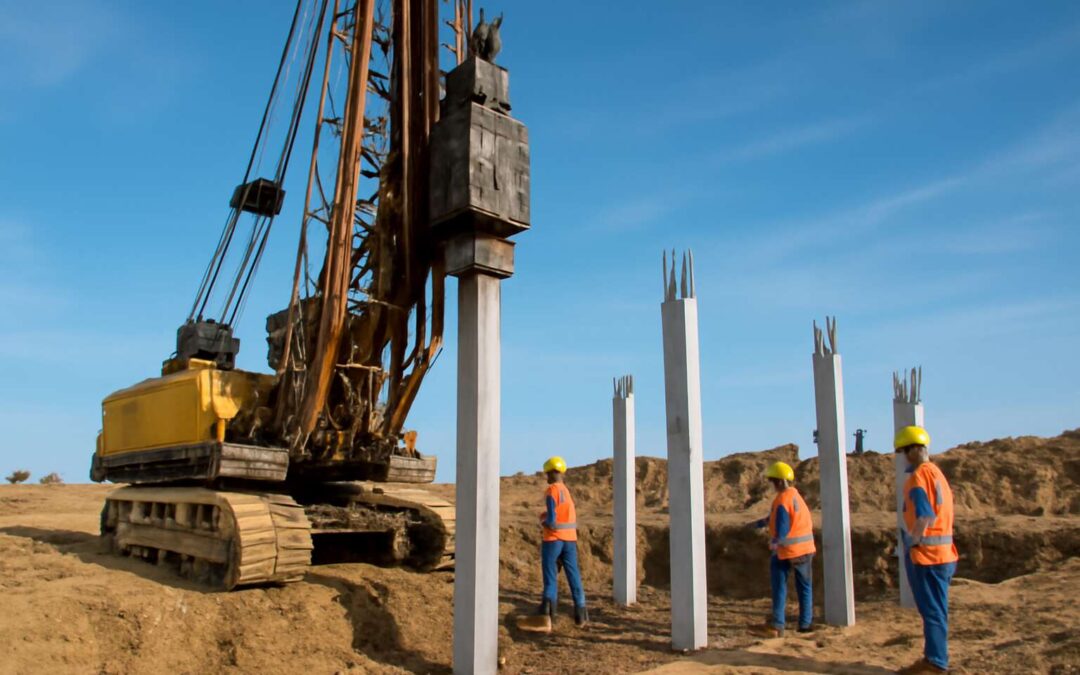
Piling System Fundamentals
Key pile types explained
In South Africa’s varied landscapes, the ground tells a story long before walls rise. ‘The ground is patient, but unforgiving,’ a veteran builder once told me, and that truth guides every project. Piling and foundation work isn’t flashy, but it is the quiet promise that a home will stand through drought, floods, and the heavy footfall of a close-knit town. The right system distributes weight, resists settlement, and keeps families safe through seasons of change—this is piling and foundation in practice. What a sturdy promise!
Here are the key pile types explained:
- Driven piles
- Bored piles
- Screw piles
The choice depends on soil, load, and depth, and it should flow with the rhythm of the landscape. In soft soils or near water, driven piles bite quickly into stable layers; for taller structures, bored piles offer depth with minimal vibration; and screw piles provide fast, adjustable support where ground is uneven. In the end, the piling and foundation decisions shape how a house endures the South African seasons.
Selecting pile foundations by site conditions
Across South Africa’s diverse soils, sites speak before builders draw a line. A veteran builder once whispered, “The ground is patient, but unforgiving,” and that truth guides every decision in piling and foundation. The fundamentals begin with listening to the land and letting it map the path for walls to rise with grace.
Piling system fundamentals hinge on site conditions: soil stratification, groundwater, and the weight the structure will bear. We map the ground, gauge depth to stable layers, and measure vibration tolerance. Consider these factors:
- Soil profile and bearing depth
- Water table and chemical environment
- Access and construction footprint
From that foundation of understanding, the system rises in harmony with the site. The right piling and foundation emerge as a response to soil, water, and load—an anchor that holds through droughts, floods, and the bustle of a growing town. I’ve seen how a well-tuned system quietly steadies a home when the land tests its resolve.
Load transfer mechanisms in piles
Across South Africa, up to 40% of early foundation issues trace to misread load paths—the soil whisper that becomes a shout under load. Urban evolution teaches foundations to listen before the first hammer. Piling system fundamentals hinge on how weight travels from cap to ground, and that journey defines durability and grace in a building’s silhouette!
Load transfer mechanisms in piles unfold along several channels:
- End-bearing on stable strata
- Shaft friction along the pile length
- Composite action at the pile cap and surrounding grout zones
In the larger scheme, these pathways anchor the piling and foundation to soil, water, and load, shaping how a city remains steady through droughts, floods, and the bustle of a growing town.
Materials used in pile construction
Foundations are the quiet engines of a city—”Foundations remember every load,” a veteran engineer likes to say. In SA’s varied soils, material choices decide how gracefully a structure ages as the ground shifts.
Materials used in pile construction are chosen for durability, corrosion resistance, and ease of installation. Reinforced concrete piles offer long-term stiffness; structural steel piles provide rapid capacity; grout seals joints within the shaft and cap. Timber is limited in dense SA settings.
Key materials include:
- Reinforced concrete piles for long-term stiffness
- Structural steel piles for rapid capacity
- Grout and cementitious composites for bonding and sealing
- Protective coatings and corrosion inhibitors for steel in SA coastal zones
These material choices shape the durability of piling and foundation as SA towns grow taller and wetter. This is where craftsmanship meets soil science in a dance of steel, concrete, and grout.
Common terminology for piling projects
Across South Africa’s growing towns, the quiet gravity of piling and foundation keeps the skyline in gentle sway. In urban cores, more than 60% of new builds rely on reliable piles to weather the soil’s moods. “Piling speaks the language of soil and skyline,” a veteran engineer once whispered.
Fundamentals hinge on common terminology that keeps teams aligned on site. You might hear terms like pile cap, shaft, and grout, each marking a milestone in the process.
- pile cap
- shaft
- grout
From boring to bearing, the journey tracks load paths through concrete, steel, and grout, a melody of craftsmanship and soil science. In the broader tale of SA construction, piling and foundation remain the quiet promise that a tall, humid future can stand.
Design and Engineering Principles for Piling
Geotechnical data requirements
Where the ground keeps its secrets, a strong design speaks softly. In the realm of piling and foundation, the earth is a patient archivist, and a well-told geotechnical story keeps tall buildings standing. South Africa’s varied soils remind us that every project deserves precise dialogue with the ground.
From this foundation of knowledge arise a few data pillars that every design respects:
- Soil profile and shear strength from boreholes and tests
- Groundwater conditions and drainage potential
- Soil variability and layer interfaces to manage settlement
- Environmental, corrosion, and seismic considerations relevant to SA
Design and engineering principles translate this data into robust load paths, durability, and constructability. Margins accommodate unforeseen variability, while performance-based criteria guide decisions. For piling and foundation, the aim is a harmonious interaction where structures breathe with the ground.
In South Africa, this dialogue blends tradition with modern analytics, ensuring safety and longevity for ambitious projects.
Load and resistance design basics
Two meters below the bustle, a quiet conversation determines a skyline’s fate. “The ground tells the story,” a South African engineer often reminds us. Design turns soil resistance into safe, serviceable buildings, treating the earth as partner rather than obstacle.
Design and engineering principles translate this data into robust load paths, durability, and constructability. Margins cushion unforeseen variability, while performance-based criteria guide choices. For piling and foundation, we map serviceability and ultimate limits, anticipate settlements, and weave corrosion protection and groundwater considerations into the plan.
Key principles to guide the work include:
- Align load paths with soil strength
- Redundant capacity and safe margins
- Account for groundwater and drainage
- Protection against corrosion and seismic demand in SA
South Africa’s blend of tradition and modern analytics keeps the dialogue honest, delivering safety and longevity across ambitious projects.
Factor of safety and design codes
Design and engineering principles for piling and foundation projects turn earth into a partner, not a barrier. In the SA context, factor of safety and design codes aren’t dusty relics; they translate soil quirks into predictable load paths and durable performance. We treat the ground with respect: align loads with soil strength, build in redundancy, and account for groundwater and drainage. A well-crafted design anticipates reality—from shifting water tables to corrosion threats—and keeps serviceability intact while respecting seismic demands. As a SA engineer likes to remind us, “The ground tells the story.”
Key elements shaping practice include:
- Factored loads and safety margins for variability
- Compliance with piling and foundation codes
- Groundwater management and drainage strategy
- Corrosion protection and seismic considerations in SA
In the SA landscape, code-driven creativity keeps structures safe and serviceable for decades.
Advantages of advanced analysis methods
The ground never forgets. In SA skylines, it murmurs through soil strata and water tables, challenging every build. The ground tells the story, and design that reads it can turn earth into a partner for piling and foundation, not a stubborn barrier to progress!
Advanced analysis methods unlock the unseen. Finite element models map nonlinear soil-structure interaction, time-dependent settlements, and seismic demands with a clarity ordinary checks cannot match. In piling and foundation work, we align loads with soil strength, letting redundancy and durability emerge from the soil’s memory.
Key advantages of these approaches include:
- Enhanced reliability through probabilistic load paths and variability
- Optimized pile layouts that fit site constraints and performance targets
- Improved groundwater management and drainage integration for long-term serviceability
In SA, piling and foundation projects rise from soil-reading craft and careful design.
Construction Methods for Piles
Driven piles installation overview
In South Africa’s soils, a well-driven pile whispers: it holds the structure upright when everything else shifts. “Structure begins where the ground ends,” a veteran geotechnical engineer reminds us, and the sentiment lands hard in piling and foundation. Installation of driven piles is a study in patience and respect for the ground.
Driven piles are installed with quiet, deliberate force—I’ve seen the hammer meet soil’s temper. A hammer or vibrodriver advances the length, sometimes with casing to control loose soils, always under close readings of straightness, settlement, and noise. It’s rugged machinery meeting the ground’s stubbornness—an honest dialogue that defines the construction process.
- Site setup and pile alignment
- Controlled hammering with vibration management
- Final verification for loading
These methods anchor the arc of piling and foundation projects in South Africa, turning soil reality into certainty. The discipline is stoic, the outcome tangible—the city’s weight resting on well-made piles that endure.
Bored piles and cast-in-situ options
In South Africa, the hum of a drill becomes a soundtrack of reliability in piling and foundation projects. Bored piles offer a patient, respectful approach—drilled rather than pounded—and they coax stable columns from stubborn soils, even where groundwater or urban constraints threaten timelines.
Bored piles sit and wait for their moment, then are filled with concrete around a reinforcement cage to form robust columns. Consider these strengths:
- Low noise and vibration on urban sites
- Flexible diameter and depth for variable soils
- Direct cast-in-situ integration with site constraints
Cast-in-situ options flourish when soil conditions suit on-site pours or space is tight. They are poured in place, often with temporary casings or open-hole methods, and can carry long, continuous reinforcement for substantial loads.
On site, engineers balance bore profiles with pour schedules and monitor straightness and cure—a quiet testament to disciplined piling and foundation work.
Ground improvement methods related to piling
In South Africa’s growing cities, the ground keeps the score in quiet resonance. “The ground is a patient partner,” notes a veteran geotechnical engineer, and piling and foundation are the quiet choreography that keeps ambitious structures upright.
Construction methods for piles unfold with soil personality and site rhythm. Ground improvement techniques are layered to coax stability from stubborn strata:
- Vibro-replacement and vibro-compaction to densify granular soils
- Jet grouting to form cemented columns in-situ
- Soil stabilization with lime or cement blends
- Preloading and wick drainage to consolidate near-surface layers
Together, these approaches balance precision and pace, turning complex ground into a steadfast stage for piling and foundation.
Pile cap design and integration
South Africa’s skyline grows on a foundation of quiet calculations. A veteran geotechnical engineer says, “The ground is a patient partner,” and the right piling and foundation strategy turns that patience into performance.
Construction methods for piles adapt to soil personality and site rhythm. For pile cap design and integration, precision shapes the joints between cap and piles, ensuring even load transfer without a jolt to the surrounding ground.
That careful integration ensures the cap and piles behave as one, translating soil interaction into reliable stiffness and predictable settlement across varied South African sites.
The result is a steadfast stage for structural ambitions, balancing speed with safety in every project.
Quality control during piling works
South Africa’s skyline proves that quality control in piling makes or breaks a project. “The ground is a patient partner,” a veteran geotechnical engineer reminds us, and the right piling and foundation strategy turns that patience into performance.
Construction methods for piles are tailored to soil personality and site rhythm. QC during piling works means tracing bore paths, verifying casing and reinforcement, and tracking concrete properties so the first read of stiffness isn’t a shock to the system.
Key QC checks include:
- Alignment and depth verification using survey data
- Concrete quality and curing monitoring
- Non-destructive integrity testing such as low-strain or cross-hole sonic logging
The result is a reliable, safe load path that makes piling and foundation projects predictable across varied South African sites.
Foundation Types and Suitability
Shallow vs deep foundations decision factors
Ground truth is real, and in construction it speaks softly but with authority. ‘The ground never lies,’ a veteran engineer once said, and the earth settled the moment piling and foundation were considered. In South Africa, the dance between soil and structure defines everything.
Foundation types and suitability hinge on subtle differences in depth and load. Shallow footings live close to the surface, while deep foundations anchor where the earth resists. Decision factors include:
- Soil bearing and depth to bedrock
- Groundwater and corrosion risk
- Access and constructability
- Loading and settlement tolerance
Behind every skyline lies piling and foundation planning, a balance of forces and form. The choice respects the site, not bravado.
Piled raft and hybrid foundation concepts
In South Africa’s growing cities, piling whispers through soil before steel takes shape—the piled raft foundation marries load paths with ground realities.
A piled raft arrangement couples a concrete raft with a network of piles, spreading loads and taming uneven settlement on mixed soils.
Hybrid concepts blend shallow footings with selective deep elements, balancing speed, cost, and risk. They shine where layers vary, offering stiffness with redundancy against groundwater and seismic quirks.
Load distribution patterns under structures
“The ground writes the plan,” a seasoned SA engineer quips, and towers seem to lean in to listen! In piling and foundation design, foundation types unfold as a dialogue between soil and structure, from shallow footings to deeper supports, each chosen to carry loads with grace and restraint.
Load distribution patterns swing with soil layers and load paths; a raft can spread forces evenly, while deep elements intercept settlements in soft strata. Matching foundation type to site realities reduces risk and keeps schedules intact.
- Uniform distribution across a raft
- Point bearing on pile tips in soft soils
- Blended approaches where stiffness varies
In South Africa, piling and foundation strategy must respect groundwater conditions and seismic realities, shaping durable urban cores.
Case-specific foundation selection criteria
Foundations are the ground’s quiet negotiation with steel and concrete. In South Africa’s shifting soils, the plan is written by the earth before the crane arrives. “The ground writes the plan,” a seasoned SA engineer quips, and I hear the soil turn pages as we map piling and foundation options!
Foundation types unfold as a dialogue with conditions: rigid soils invite broader, even loading; soft or perched layers demand deeper elements that intercept settlements. Suitability rests on site-specific facts—soil stiffness, groundwater behavior, seismic risk, loads, and access, guiding piling and foundation choices. Consider these criteria:
- Soil profile and bearing capacity
- Groundwater level and variability
- Seismic design considerations
- Construction access and program
Maintenance, Inspection, and Longevity
Inspection techniques for piles
Across South Africa, a well-tended pile system can extend a building’s life. A telling stat keeps the nerve: proactive maintenance and careful inspection can cut lifecycle costs by as much as 30% for piling and foundation projects. Reliability feels almost magical as soils shift and time passes.
Maintenance acts as a quiet guardian, tracking settlement, corrosion on exposed sleeves, and grout integrity. Subtle signs from sensors guide engineers before issues become problems.
An approach to inspection can include:
- Visual audits of exposed piles
- Non-destructive testing for stiffness
- Load monitoring and settlement trends
- Corrosion mapping or protective coating checks
Longevity comes from adapting to soil changes and recording field data to refine models. For piling and foundation, ongoing monitoring keeps performance aligned with reality.
Corrosion protection and durability
In South Africa’s variable soils, a well-maintained piling and foundation keeps a building steady as the ground shifts. Smart maintenance can trim lifecycle costs by up to 30%, turning small issues into predictable performance. Maintenance acts as a quiet guardian, tracking settlement, exposed sleeve corrosion, and grout integrity, with field data guiding adjustments.
- Visual audits of exposed piles
- Non-destructive tests for stiffness
- Load monitoring and settlement trends
Inspection unfolds beyond a one-off check. Regular sensor trends, corrosion mapping, and coating reviews turn data into confidence—catching shifts before they become costly fixes.
Longevity rests on tracking soil changes and recording field data to refine models. Corrosion protection and durability are built into every interface, with durable sleeves and protective coatings extending life. Ongoing monitoring keeps performance aligned with reality, ensuring a structure stands tall through time.
Repair methods for damaged piles
Maintenance—I’ve learned—keeps a building anchored as soils move. In South Africa’s variable ground, a disciplined program can trim lifecycle costs by up to 30%. For piling and foundation, response is proactive, not reactive, turning micro-issues into predictable performance.
- Steel sleeve refurbishment to reseal and shield corrosion
- Epoxy or cementitious grout injections to arrest cracks and rebind the core
- Carbon-fibre wraps or steel plates for retrofitting and load redistribution
Longevity hinges on a rapid, data-driven approach: tracking soil changes, logging field observations, and revising models as new data arrives. After repairs, corrosion protection and durable sleeves stay in place, and coating reviews stay current. Ongoing monitoring sustains piling and foundation performance through time.
Long-term monitoring and maintenance planning
Maintenance in the field is the quiet guardian of pil ing and foundation. In South Africa’s variable soils, a disciplined program keeps a building anchored as the ground shifts. When smaller issues are tackled early, lifecycle costs can drop dramatically; I’ve seen projects carve years off their maintenance bill by embracing proactive care rather than reactive fixes.
- Regular field surveys and non-destructive testing catch micro-issues before they grow.
- Coating checks and timely refreshes deter corrosion and extend sleeve life.
- Data-driven revisions to models follow new soil movement data in real time.
Longevity rests on rapid, data-driven monitoring: sensor data, field observations, and model revisions as new data arrives. With ongoing monitoring, coating reviews stay current and corrosion protection remains effective. This approach turns micro-issues into predictable performance over decades.
Case Studies and Industry Standards
Real-world pile design case studies
Ground truth beats guesswork—every safe, economical project hinges on how well the ground is understood. In real-world foundation projects across South Africa, decisive design choices turn uncertainty into certainty, all framed by robust industry standards. These stories reveal that soil layering, groundwater flow, and load transfer don’t just influence choice—they define viability. When professionals align testing, scrutiny, and precaution, foundations stay resilient long after the dust settles.
- Coastal harbour piles facing tidal cycles
- Urban basements on reclaimed soils
- High-rise transfers on weak clays
Industry standards steer the process—from geotechnical data interpretation to quality control during piling and foundation works. In South Africa, practitioners draw on EN 1997 family codes and local best practices to harmonise design with site realities, ensuring durability, safety, and long-term performance across challenging soils.
Code, standards, and guidelines overview
Across South Africa, misreading soil profiles can inflate foundation costs by up to 20%. In real-world piling and foundation projects, the surest path from uncertainty to certainty is a disciplined embrace of standards that translate ground truth into safe, economical design.
Case studies from coastal harbours, reclaimed urban basements, and city towers show that when testing, scrutiny, and precaution align with industry codes, long-term performance outlasts the dust. These examples illustrate how soil layering, groundwater considerations, and load paths are managed within a clear regulatory framework.
- EN 1997 Geotechnical Design (and related EN 1997-1/2 guidance)
- Local South African standards and best-practice guidelines harmonising with EN 1997 to reflect site realities
- Quality control and testing protocols during piling and foundation works
Together, these standards turn practice into resilience, ensuring piling and foundation systems endure long after the final pour.
Testing procedures: pile integrity and load tests
Across South Africa’s coastal harbours and urban basements, disciplined testing trims uncertainty and waste—costs can rise by up to 15% when ground truths and load paths are misunderstood. Aligned with EN 1997 and local guidelines, testing converts field data into robust piling and foundation decisions.
Case studies from ports, basements, and towers reveal how pile integrity tests and load tests safeguard performance.
- Low-strain PIT detects flaws without disturbing piles
- Static/dynamic load tests verify capacity and settlement
- CSL and other NDT map interior continuity
Together they show how quality control under standards translates field realities into durable foundations.
Quality assurance in construction projects
South Africa’s harbour and high-rise boom has a secret weapon: disciplined QA. When ground truths and load paths are locked in, projects dodge costly surprises; studies show costs can rise by up to 15% without it. Aligned with EN 1997 and local guidelines, testing turns field data into sound piling and foundation decisions.
Case studies from ports, basements, and towers prove the point: quality control pays for itself in performance. Across these projects, teams translate soil quirks into predictable load paths and enduring piling and foundation outcomes.
- Port of Durban’s tidal zones: resilience under dynamic action
- Cape Town urban basements: vibration control and settlement management
- Johannesburg high-rise towers: long-term monitoring and durability under variable loads
Quality assurance in construction projects is not a slogan; it’s the engine that turns field realities into durable piling and foundation outcomes, guided by codes and guidelines.
