
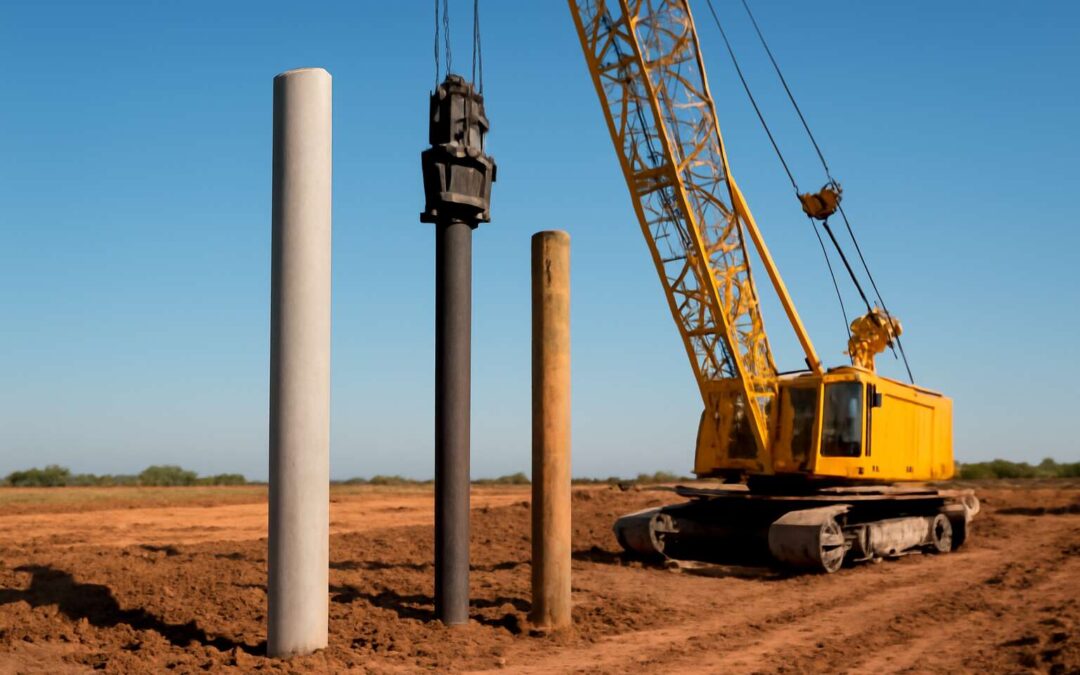
Categories of Piling Systems
Driven Piles
Foundations that endure begin with what’s driven into the ground. In South Africa’s dynamic construction scene, driven piles stand as quiet workhorses, delivering reliability where soil is variable and budgets are tight. “Strong foundations shape cities,” a line that captures why the base matters more than the flashy façade.
Categories of piling systems driven piles come in a few dependable types. Common choices include:
- Steel piles (H-piles and pipe piles)
- Precast concrete piles
- Timber piles
- Composite piles
Each type suits different ground conditions and project timelines. Steel piles drive quickly and handle high loads, precast concrete piles offer predictable quality and faster installation, timber piles provide cost efficiency in soft soils, and composite piles blend durability with lighter weight. In the broader types of piling conversation, driven piles remain a cornerstone.
Bored Piles
In South Africa’s ever-shifting soils, bored piles quietly anchor the tallest ambitions. A veteran engineer once quipped, “The ground always keeps score!” and with bored piles the score is steady—precision over guesswork.
Within the broad family of types of piling, bored piles are drilled rather than driven, delivering predictable diameters and depths even in mixed strata. They excel where vibrations must be minimized and where access is constrained, threading through soft layers toward firmer foundations.
- Uncased bored piles
- Cased bored piles
- CFA (continuous flight auger) piles
On urban SA projects, this approach offers design flexibility, clean installation, and on-site reinforcement as needed—traits that keep timelines tight and budgets disciplined while the ground reveals its secrets.
Cast In Place Piles
The ground keeps score, and cast-in-place piles answer with quiet precision in the spectrum of types of piling. Poured on site, these columns tame restless soils without the hammering of drives, a virtue in crowded city blocks where vibration must be kept to a minimum.
Categories of Piling Systems include several cast-in-place options:
- Drilled cast-in-place piles
- CFA (continuous flight auger) piles
- Jet-grouted piles
- Under-reamed cast-in-place piles
On urban SA projects, these choices offer on-site flexibility, clean installation, and reliable load transfer from column to formation, even when soils shift beneath.
Behind each option lies a meticulous balance of reinforcement, casing choices, and pump strategy—an unseen choreography that turns stubborn ground into a solid foundation.
Specialty Piles
Urban sites in South Africa mean ground that talks back—and loudly. Industry chatter suggests vibration-free foundations save projects serious downtime, with some firms reporting up to 28% faster progress when the right specialty approach is chosen. These categories slot neatly into the broader catalog of types of piling, giving engineers a toolkit to respect existing structures while pushing new footings into the future.
Drilled cast-in-place, CFA, jet-grouted, and under-reamed piles each offer a different dance with soil and load. On the page, they look similar; in the field, they’re tuned to the ground you actually have.
- Drilled cast-in-place piles
- CFA (continuous flight auger) piles
- Jet-grouted piles
- Under-reamed cast-in-place piles
Behind every option lies a choreography of reinforcement, casing, and pump strategy—the backstage drama that turns stubborn ground into reliable column support. On SA projects, these choices deliver on-site flexibility, clean installation, and dependable load transfer even when soils shift beneath.
Design and Performance Considerations
Load Capacity and Verification
Foundations don’t bluff. When the ground shifts, the structure stands—or collapses. “A solid pile is the quiet heartbeat of a building,” says an old-hand engineer. In South Africa, the choice among types of piling is driven by design and performance considerations right from soil tests to load paths.
Load capacity and verification are the spine of a safe build. Engineers calculate capacity and then confirm it in the field with tests and monitoring. The goal is no more than a tight margin of settlement under peak loads.
- Soil load-bearing capacity and settlement expectations
- Verification via static or dynamic tests
- Ongoing monitoring during early load application
Design and performance considerations also cover vibration, noise, durability, and compatibility with nearby structures. Even with SA’s varied geology, a well-chosen piling system keeps the project on schedule and within budget.
Settlement and Stiffness
A veteran engineer once whispered, “A solid pile is the quiet heartbeat of a building.” In South Africa’s varied soils, settlement behavior and stiffness define success more than raw capacity. Within types of piling, the question isn’t only how much load the pile can carry, but how far and how evenly the ground will permit movement under peak forces, and how the system remains tolerant to the city’s constant vibrations.
Design and performance considerations also cover vibration, noise, durability, and compatibility with nearby structures. Even with SA’s diverse geology, the right stiffness profile keeps the project honest—stiff enough to resist pull and sway, yet flexible enough to absorb cycles of load and weather.
- Settlement control through uniform stiffness
- Soil-pile interaction and group effects
- Vibration and noise mitigation near active sites
That quiet stiffness is more than strength; it’s a moral agreement with the ground, a promise that the structure will endure with dignity.
Group Pile Effects and Spacing
Space, not sheer strength, writes the true destiny of a tower. In the realm of types of piling, the spacing of piles conducts the city’s quiet chorus—the tempo of settlement and the rhythm of sway. A veteran engineer once whispered, “The ground forgives precise spacing more than heroic capacity!” This hook frames design and performance as a careful conversation with the soil.
Group pile effects and spacing determine how loads share among elements, how stiffness distributes through the cap, and how the system hums under the city’s ceaseless traffic. In varied SA soils, tiny gaps can tilt deflection and alter vibration paths, making spacing a frontline design decision.
- Group geometry and pile count
- Inter-pile spacing relative to diameter
- Soil layering and stiffness variation
- Proximity to existing structures and utilities
These considerations shape the performance profile of the project, balancing resilience with adaptability as the ground speaks through its orderly arrangement.
Durability and Corrosion Protection
Durability and corrosion protection sit at the heart of design when choosing among the types of piling. In South Africa’s varied climate—coastal salt spray, inland moisture, and aggressive soils—a single coating can determine decades of performance. Designers treat longevity as a design constraint, not an afterthought. We know better!
- Galvanized or epoxy-coated steel piles
- Concrete piles with reinforced details and adequate cover
- Cathodic protection in marine or highly saline soils
Durability choices also guide compatibility with soil chemistry and groundwater movement, shaping the project’s lifecycle in a practical, city-minded way.
Installation Methods and Equipment
Driven Piling Methods
Across South Africa’s fast-moving sites, the quiet genius of types of piling surfaces when the hammer falls. On urban projects, driven installation can trim on-site lead times by up to 25%, turning ambitious timelines into rock-solid foundations. Installation Methods and Equipment translate soil into structure with a confident, almost spectral precision!
Equipment and methods follow a simple creed: energy where it’s needed, and alignment that never wavers. Here’s what appears on most jobs:
- Diesel or hydraulic hammer for robust energy transfer
- Vibratory hammer to ease piles through dense fillings
- Piling rig with a reliable lead system for precise alignment
- Crawler crane or mobile crane to position and drive
- Drop hammer for smaller piles in tight spaces
Choreography of force and the lead guide the pile toward its ultimate duty—supporting a frame that will face wind, water, and time. In the broader types of piling, driven methods hold a distinct advantage in speed and predictability.
Drilled Piling Techniques
When the drill hums and tremie tubes slide into place, drilled piling techniques reveal themselves as the steady heartbeat of South Africa’s urban foundations. Installation methods lean on precise rigs, controlled grout, and careful alignment to place piles with minimal vibration and maximum bearing. In crowded sites, rotary heads and continuous flight auger (CFA) equipment shine, turning stubborn soils into predictable supports and keeping ambitious timelines on track.
- CFA piles for continuous concrete with minimal spoil and vibration
- Rotary bored piles for hard substrates and large-diameter demands
- Augered cast-in-place with tremie for controlled grout in water-sensitive layers
Within the types of piling, drilled techniques deliver deep capacity in challenging strata. The equipment and approach channel energy to where it’s needed, yielding clean bore profiles and tight tolerances that reduce downstream risk on complex projects.
Continuous Flight Auger and CFA Piling
In South Africa’s crowded urban fabric, a staggering 62% of new foundations now rely on Continuous Flight Auger piling. This quiet titan of the types of piling keeps vibration down while delivering depth and precision, even in challenging soils. The result is a foundation rhythm that lets cranes sing and streets stay open.
Continuous Flight Auger (CFA) piles are installed with a hollow-stem auger that bores and simultaneously pumps concrete through the stem. As the drill withdraws, the pile forms in one smooth act, minimizing spoil and disruption. The approach yields low vibration and predictable capacity for large-diameter markets.
On site, CFA rigs with precise auger heads and rotation control ensure alignment and depth control, even on urban plots where space is tight. The method delivers consistency across soil layers, shielding nearby structures from disturbance and keeping projects on track.
Piling Rig and Equipment Selection
On South Africa’s crowded job sites, the installation method chosen can be the difference between a project that hums and one that grinds to a halt. The best piling rigs blend power with restraint, delivering predictable performance without rattling the neighbourhood. In the labyrinth of types of piling, the right setup keeps the ground calm while meeting depth and alignment demands.
- Rig capability versus project scale—crane reach, duty cycle, and mobility on constrained plots
- Vibration and noise profiles to protect nearby structures and maintain community relations
- Automation and control systems for depth and alignment accuracy
- Maintenance, fuel efficiency, and parts availability to prevent downtime
Selection hinges on harmonizing soil reality, site access, and sequencing. A rig that fits the plot—whether compact crawler or taller rotary—delivers consistent performance with minimal disturbance. This alignment across the types of piling shapes the project cadence, preserving urban life while foundations take shape.
Geotechnical and Site Conditions
Soil Type and Pile Suitability
Across South Africa, site investigations reveal soil variability in roughly 60% of urban projects, and that variability often rewrites the types of piling. Geotechnical data tell the tale: granular soils demand rapid friction, cohesive clays require deeper, more cautious installations, and groundwater levels can nudge designers toward different solutions. The soil type and pile suitability dance together to shape the foundation strategy, without pretence.
- Granular soils (sand, gravel) favor friction-based capacity and quicker installation.
- Cohesive soils (clay, silt) may require larger boreholes or ground improvement to meet load goals.
- Rock or hardpan with shallow depth can demand rock sockets or predrilled solutions.
Ultimately, the art lies in translating local site conditions into the right types of piling, balancing risk, cost, and constructability on South African sites.
Groundwater Management
On South Africa’s urban sites, groundwater management can cut foundation delays by up to 30%, a punchy truth for developers chasing deadlines. Geotechnical insights show groundwater fluctuations shaping the types of piling and the way one reads soil data. When groundwater levels rise, the foundation strategy must adapt—balancing risk, cost, and constructability without turning the site into a mud pie.
- Wellpoint and sump dewatering systems
- Grouting curtains and impermeable barriers
- Cut-off walls and diaphragm features
- Real-time piezometer monitoring
In practice, aligning site conditions with the pile plan means embracing flexibility in design and sequencing. The right groundwater management approach keeps the project moving and clarifies the types of piling that will stand up to local geology.
Seismic Considerations
“The ground talks,” says a geotechnical engineer in Johannesburg. In South Africa’s urban cores, soils, water pockets, and stiff layers can flip a calm site into a challenge. The choice of types of piling becomes a conversation with the earth.
Seismic considerations hinge on local site response, soil stiffness, and liquefaction potential. Ground behavior under shaking reshapes pile performance, influencing spacing and how beams carry lateral loads. Piezometer readings and soil tests guide whether a rigid, flexible, or hybrid approach fits.
- Soil type and liquefaction potential
- Near-surface layers and amplification
- Dynamic interaction with surrounding soil
Even in SA, the story remains dynamic: seismic realities demand a design robust under change, keeping foundations true. When soil and structure align, the types of piling answer with resilience across urban landscapes.
Site Investigation Best Practices
In bustling South African urban cores, the earth still talks in whispers. A telling stat: piling delays can reach 60% when site investigations miss the mark. Geotechnical and site condition assessments guide the conversation around types of piling, turning a raw plot into a mapped environment. From near-surface layers to hidden groundwater pockets, the reconnaissance report frames stiffness, settlement, and dynamic behavior.
Best practices in site investigation strike a balance between depth and practicality. The following activities maintain data quality while keeping schedules humane:
- Borehole logs reveal layering
- In-situ CPT tests for stiffness
- Targeted sampling with lab characterization
Interpretation separates solid foundations from headaches. Field logs, historical data, and risk awareness converge to a robust approach for pile selection—without drama, just a touch of wit.
Standards Codes and Sustainability
Standards and Design Codes
Standards Codes and Sustainability Standards and Design Codes aren’t dry formalities—they are the weather vanes of our craft. In the realm of types of piling, they translate soil whispers and load expectations into safe, enduring structures. In South Africa, local SANS guidelines stand shoulder to shoulder with European and global design codes, guiding material choices, verification protocols, and long-term performance. Compliance is the keystone, and it spares projects from costly rework and wasted resources!
Within this framework, sustainability standards light the path toward responsible design.
- Green Star SA criteria from the Green Building Council of South Africa
- Material embodied energy and durability requirements embedded in design codes
- Site-specific water management and groundwater protection provisions
For those shaping the skyline, the cadence of standards keeps the narrative vibrant and enduring.
Quality Assurance and Testing
As the skyline folds into the dawn, standards stop being paper and become weather for the build. “Compliance is the warranty on tomorrow,” a veteran engineer reminds us. In South Africa, SANS guides material choices, aligning with global codes to translate intention into enduring form.
Quality Assurance and Testing are the quiet guardians of safety and longevity. They ensure that every pile and its workmanship meet the design intent.
- Material traceability and certification
- In-situ pile integrity and load verification
- Independent third-party testing and documentation
Within this framework, sustainability criteria and embodied energy considerations gently steer choices toward durability and reduced environmental footprint—but never at the cost of performance, especially for those shaping the nation’s skyline through types of piling.
Sustainable Piling Materials and Methods
With every rising crane, durability begins where standards meet daylight. In South Africa, 72% of new commercial projects now specify sustainability criteria, and the choices span the types of piling, with the stakes being durability.
Standards codes, including SANS and international equivalents, translate intent into enduring form. They govern material traceability, testing protocols, and environmental limits, ensuring embodied energy stays in check while performance remains uncompromised.
- Low-embodied-energy concretes with supplementary cementitious materials (SCMs)
- Certified timber and responsibly sourced steel
- Durable coatings and corrosion protection for long life
From a practical stance, sustainable piling materials and methods balance durability with renewability. Durable concretes, responsibly sourced steel, and timber from certified forests become viable when paired with design-for-inspection and modular construction practices. This balance is a philosophy that shapes the skyline.
Remediation and Reuse of Piles
South Africa’s skyline is a ledger of careful decisions: 72% of new commercial projects now embed sustainability criteria, shaping every decision about piles. Standards codes—from SANS to international equivalents—translate aspirations into durable form, guiding materials, testing, and environmental thresholds. In this light, standards also open doors to remediation and reuse of piles, proving that the soil’s memory can be respected while construction moves forward.
Within the spectrum of types of piling, reuse hinges on thoughtful assessment and design-for-recovery.
- Reconditioning and sealing for service life extension
- Repurposing piles as structural elements where feasible
- Recycling concrete and steel fragments into new aggregates or products
Applied with discipline, remediation and reuse make the beacon of standards shine, turning aging piles into assets rather than waste — a quiet revolution in the types of piling that build resilience into our cities.
Maintenance and Inspection
South Africa’s skyline marches forward with 72% of new commercial projects embedding sustainability criteria, and standards codes steer every decision about piles. For the critical link between safety and longevity, these codes guide materials, testing, and environmental thresholds—shaping the types of piling that anchor our cities.
Maintenance and inspection regimes aligned with standards keep piles performing beyond their design life. Regular audits, corrosion monitoring, and performance verification become ongoing safeguards rather than afterthoughts.
- Compliance with SANS and international standards
- Scheduled sustainability maintenance and monitoring
- Independent inspections and testing regimes
Remediation and reuse are part of the living policy, turning aging piles into assets while minimizing waste. The journey from design to rehabilitation is guided by resilience, accountability, and the soil’s memory—proof that the types of piling landscape can adapt as the built environment evolves.
